


ISO 9001 & ISO 13485 Certified WHO-GMP CE Marked Manufacturing in India since 1955
0%

Choosing an Endotracheal Tube in 2026 requires more than selecting a familiar size. Airway anatomy, procedure length, ventilation needs, and patient vulnerability all influence the decision. A small pediatric airway differs sharply from an adult trauma airway. So does a swollen airway after surgery. Clinicians must balance passage through the glottis, effective ventilation, aspiration risk, and potential mucosal injury. The “largest tube possible” approach is not always safest. It may deserve reconsideration.

This guide examines internal diameter, outer diameter, cuff design, tube length, material, and available depth markings. It also considers reinforced, microlaryngeal, subglottic-suction, and specialized tubes. A cuff that seals at the lowest effective pressure can support ventilation while limiting tracheal compression. Cuff pressure still needs measurement, not guesswork. Patient position can change tube depth. Facial structure, neck mobility, and planned surgery can change access. These details matter.

Reliable selection combines bedside experience with current peer-reviewed airway guidance, manufacturer instructions, and local protocols. Video laryngoscopy may improve visualization, but it does not remove the need for backup planning. Tube choice should be documented, checked, and reassessed after placement. Chest movement, waveform capnography, breath sounds, and cuff pressure provide practical confirmation. No single design fits every patient. Even experienced teams can overlook a small detail. This article highlights those decisions, explains their trade-offs, and identifies areas where clinical judgment remains necessary.
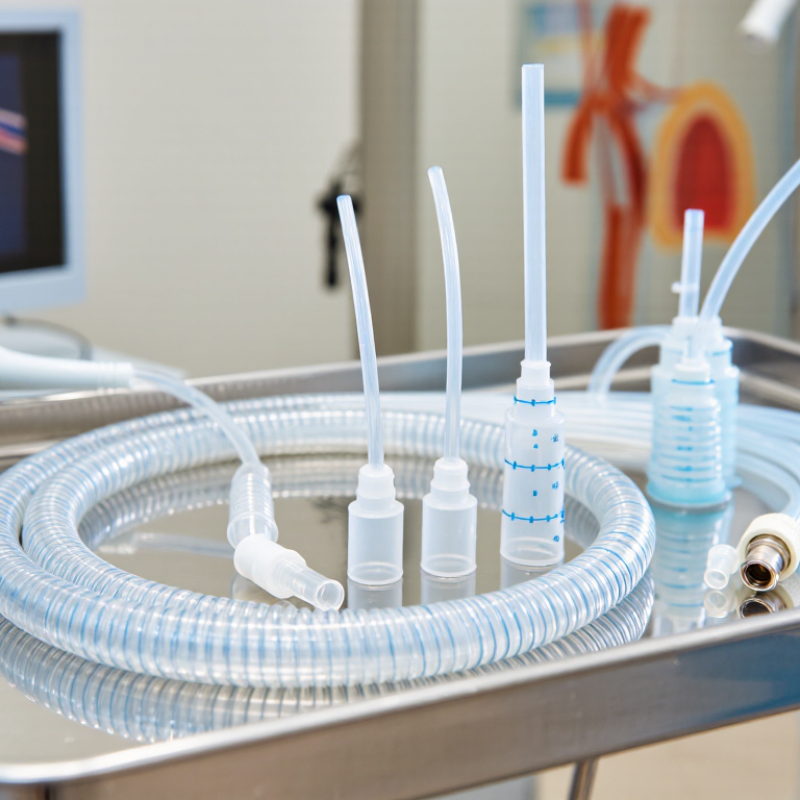
2026 How to Choose the Right Endotracheal Tube?

Understanding Endotracheal Tube Types and Clinical Applications

2026 How to Choose the Right Endotracheal Tube?

Understanding endotracheal tube types starts with the clinical task, not the product label. A standard cuffed tube suits most adult oral intubations and supports controlled ventilation. Cuff pressure should remain near 20–30 cmH2O, a commonly cited clinical safety range. Excess pressure may injure tracheal tissue. Low pressure can permit leakage and aspiration. Pediatric selection depends on age, airway size, and local protocol. Uncuffed tubes may still suit selected children, but the decision requires careful assessment.

Special situations need different designs. Reinforced tubes resist kinking during prone surgery or head movement. A subglottic-suction tube may help remove secretions above the cuff in patients needing prolonged ventilation. A double-lumen tube enables one-lung ventilation during thoracic procedures, but it demands precise placement and confirmation.

In 2023, the DEVICE randomized trial in the New England Journal of Medicine included 1,417 critically ill adults. First-attempt success reached 85.1% with video laryngoscopy, compared with 70.8% using direct laryngoscopy. The tube still matters, but visualization matters too.

A smaller tube is not automatically safer. It may increase resistance and complicate suctioning. A larger tube may ease bronchoscopy, yet cause more airway trauma. Clinicians should confirm depth with capnography, bilateral assessment, and imaging when indicated. Tube choice can look simple on paper. Real airways are not. The 2022 American Society of Anesthesiologists difficult-airway guidance supports planning alternatives before induction, because the first tube may not be the final tube.

Assessing Patient Anatomy, Age, and Airway Management Needs

2026 How to Choose the Right Endotracheal Tube?

Choosing an endotracheal tube starts with the patient, not a product catalog. Review age, height, weight, airway history, and the planned route. An infant’s narrow airway leaves little room for error. Edema can quickly change the fit. For children, age-based estimates may guide selection, but direct assessment and local pediatric protocols remain essential. Have alternatives ready. Do not treat a formula as a final answer.

Examine mouth opening, dentition, neck movement, facial structure, and previous intubation records. Trauma, swelling, burns, or limited cervical motion may require a different plan, not merely a smaller tube. Airway management needs also shape the choice. Cuffed tubes can support ventilation and reduce leakage when used with measured pressure. Yet cuff pressure must be monitored. Uncuffed options may suit selected pediatric situations, depending on clinical judgment and protocol. Tube length matters as much as diameter. A tube that is too deep can obstruct a main bronchus. One too shallow can lose the airway.

Experienced teams prepare suction, oxygenation support, backup sizes, and a rescue airway plan before induction. Confirm placement through continuous clinical assessment and appropriate monitoring, including exhaled carbon dioxide when available. Recheck after repositioning, transport, or ventilation changes. Small oversights happen. A tube can look correct on paper and still fit poorly. Document tube size, depth, cuff pressure, confirmation method, and the patient’s response.

Selecting the Appropriate Tube Size, Cuff, and Design

2026 How to Choose the Right Endotracheal Tube?

Selecting the appropriate tube size, cuff, and design requires more than following a standard chart. Adult tubes commonly range from 7.0 to 8.0 mm internal diameter. However, airway anatomy, procedure duration, and ventilation needs should guide the final choice. A smaller tube may reduce trauma, but it can increase resistance and complicate suctioning.

The 2011 NAP4 audit reported one major airway complication in approximately every 22,000 anesthetics. That figure is low, yet each event can become serious within minutes.

Cuff selection also matters. High-volume, low-pressure cuffs are widely preferred for prolonged ventilation. The American Association for Respiratory Care recommends maintaining cuff pressure near 20–30 cmH2O. Measure it after inflation, not by relying on finger feel. Excessive pressure may impair tracheal blood flow. Too little pressure can permit leakage and aspiration.

Tube design should match the clinical task. Reinforced tubes may resist kinking, while tapered or subglottic-suction designs can support selected patients. Evidence is useful, but not every patient fits the evidence.

Tips: Confirm the internal diameter before insertion. Check tube depth at the teeth. Reassess cuff pressure after repositioning. Keep a smaller tube available. A “standard” choice can still be wrong. My own practice would benefit from documenting why a tube was selected, because memory often hides weak decisions.

Comparing Materials, Features, and Compatibility With Procedures

2026 How to Choose the Right Endotracheal Tube?

Material and procedure compatibility should guide tube selection, not habit. Standard PVC tubes are cost-effective and widely available. Silicone tubes feel softer and may reduce tissue pressure during prolonged procedures. Reinforced tubes resist kinking when the patient’s head or neck moves. However, their embedded wire can complicate cutting, tube exchange, or imaging.

For laser airway surgery, use a tube specifically designed for laser compatibility. Regular PVC is not an acceptable substitute.

Cuff design also matters. High-volume, low-pressure cuffs support a wider sealing area, but pressure still requires monitoring. The ASA 2022 Difficult Airway Guidelines recommend continuous capnography after intubation.

The NAP4 audit recorded airway-related death or brain damage at approximately one case per 180,000 anesthetics. That figure is reassuring, but every tube choice still carries practical risks.

A narrow tube may obstruct suction or bronchoscope passage. A wider tube may increase laryngeal contact and insertion difficulty. I sometimes underestimate this trade-off when focusing only on internal diameter.

Tips: Check the procedure, patient anatomy, cuff pressure, and bronchoscope size before opening the package. Confirm the tube’s external diameter, not only its internal diameter. Keep a compatible backup tube nearby. Reassess after positioning, especially during head and neck surgery. Small details matter.

Checking Placement, Safety, and Ongoing Tube Performance

2026 How to Choose the Right Endotracheal Tube?
Choosing an endotracheal tube is not only about diameter or material. Placement must be verified with continuous waveform capnography, visible chest movement, and clinical assessment. Auscultation helps, but it can mislead. The NAP4 report recorded 133 major airway complications, including 58 deaths and 17 cases of severe brain damage. Many events involved delayed recognition of misplaced or displaced tubes. Confirm the tube depth at the teeth or lips, then reassess after turning, transport, or surgery. A chest radiograph may be necessary when anatomy or clinical findings remain uncertain.
Safety continues after successful intubation. Measure cuff pressure with a manometer, rather than estimating by touch. AARC guidance commonly supports maintaining cuff pressure around 20–30 cmH2O, while avoiding unnecessary overinflation. Secure the tube firmly, but inspect the skin and fixation points regularly. Small leaks, rising airway resistance, or reduced delivered volume may indicate migration, kinking, secretion blockage, or cuff damage. Check the tube’s internal diameter against the patient’s needs and planned ventilation. Narrow tubes can increase resistance. Humidification and gentle suctioning also support ongoing tube performance. Real-world practice is rarely perfect; reassessment can be missed during busy transfers, and that weakness deserves honest correction.

FAQS

How should clinicians choose an endotracheal tube?

Start with the patient and procedure, not the catalog. Consider age, airway size, route, ventilation needs, and surgical position. Keep backup sizes available. The first choice may be wrong.

What cuff pressure is commonly targeted?

A commonly cited range is 20–30 cmH₂O. Measure pressure with an appropriate device. Excess pressure may injure tracheal tissue. Low pressure may allow leakage or aspiration.

How does tube selection differ for children?

Pediatric selection depends on age, airway size, and local protocol. Uncuffed tubes may suit selected children. Cuffed tubes may support ventilation when pressure is monitored. An infant’s airway leaves little room for error.

When might a reinforced tube be useful?

Reinforced tubes can resist kinking during prone surgery or head movement. They may help when external bending is likely. They do not remove the need for placement confirmation.

What is the purpose of a subglottic-suction tube?

It can help remove secretions above the cuff during prolonged ventilation. This may support secretion management. The patient still needs regular assessment and appropriate suctioning practice.

When is a double-lumen tube considered?

It may enable one-lung ventilation during thoracic procedures. Placement must be precise. Confirm position using appropriate clinical assessment and imaging when indicated.

Is a smaller tube always safer?

No. A smaller tube can increase resistance and make suctioning difficult. A larger tube may ease bronchoscopy but increase airway trauma. Fit depends on the patient, not size alone.

How should tube placement be confirmed and documented?

Confirm exhaled carbon dioxide, bilateral chest movement, and clinical response. Use imaging when indicated. Recheck after repositioning, transport, or ventilation changes. Document size, depth, cuff pressure, and confirmation method.

Conclusion

Choosing the right Endotracheal Tube is an important part of safe and effective airway management. This guide explains the main tube types and their clinical applications, helping healthcare professionals match the design to the patient’s condition and planned procedure. Selection should consider patient anatomy, age, airway difficulty, ventilation requirements, tube diameter, length, cuff type, and the need for specialized features such as reinforced or preformed designs.

The article also highlights the importance of comparing tube materials, flexibility, visibility, connector compatibility, and suitability for surgical or critical-care settings. After insertion, careful placement confirmation is essential through clinical assessment and appropriate monitoring. Ongoing evaluation of cuff pressure, tube security, airway resistance, ventilation, and signs of complications helps maintain performance and patient safety. A thoughtful, patient-specific approach supports reliable airway control throughout the procedure and during continued respiratory care.

Amelia

Amelia

Amelia is a professional marketing specialist dedicated to helping customers better understand innovative products and practical solutions. With extensive knowledge of the company’s offerings, she combines market insight, product expertise, and clear communication to create informative content that......