


Choosing Microporous Surgical Tape in 2026 requires more than comparing prices or adhesive strength. The right tape should secure dressings while respecting fragile skin, moisture, movement, and patient comfort. A practical evaluation begins with the patient’s skin condition. Elderly skin may tear under excessive tension. Sweaty skin may loosen an otherwise reliable adhesive. Small details matter, including edge lift, roll width, residue, and painless removal.
Market evidence shows why careful selection matters. Fortune Business Insights valued the global medical tapes market at approximately USD 7.1 billion in 2023 and projects continued growth through 2032. Grand View Research also identifies healthcare demand, wound management, and advanced adhesive technologies as important market drivers. However, estimates differ between reports. That difference deserves attention, not dismissal. Market size does not prove clinical suitability.
Wound-care specialist Dr. Mikel Gray has emphasized, “There is no such thing as the best dressing, only the best dressing for a particular wound.” The same principle applies to Microporous Surgical Tape. A breathable paper tape may suit light dressings and frequent inspection, while a stronger option may better support tubing or securement. Clinicians should review peel adhesion, shear resistance, breathability, latex status, sterilization compatibility, and manufacturer testing. Product labels are useful, but real-world performance can vary with skin oils, humidity, and application technique. Sometimes, the most expensive tape is not the safest choice. A short skin test may reveal more than a sales brochure.
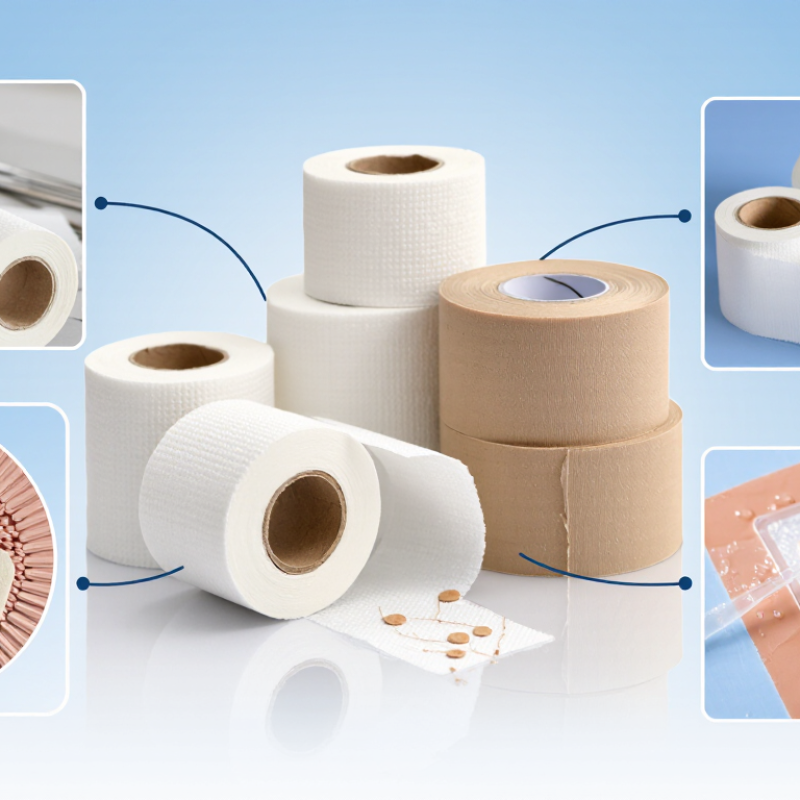
How to Choose Microporous Surgical Tape in 2026?
Microporous surgical tape is a breathable adhesive strip used to secure dressings, tubing, and light wound coverings. Its thin backing contains tiny pores, allowing limited passage of water vapor and air. The adhesive grips the skin without forming a completely sealed surface. That balance matters. Excess moisture may soften skin, while excessive dryness can increase discomfort during removal.
The World Health Organization reports that surgical site infections affect about 11% of surgical patients in low- and middle-income countries. This figure does not mean tape prevents infection. It shows why secure, clean dressing fixation remains clinically important. In practice, clinicians assess skin condition, wound location, humidity, and how often the dressing needs changing. A flexible tape may follow movement around a joint. A gentler adhesive may suit fragile or elderly skin. Not every “breathable” tape performs equally. Testing under real clinical conditions is still imperfect, and marketing language can sound more certain than the evidence. Look for documented adhesion, moisture-vapor performance, latex status, and skin-compatibility testing, such as evaluations aligned with ISO 10993 principles. Never use microporous tape as a substitute for sutures, staples, or professional wound assessment when deeper closure is required.
Microporous surgical tape is a breathable medical tape made with a porous nonwoven backing and a pressure-sensitive adhesive. Its interconnected pores allow air and water vapor to pass through while helping secure dressings, tubing, and lightweight medical devices.
The chart shows common nominal tape widths used for clinical applications. Narrow widths are generally suitable for small dressings and tubing, while wider widths provide more coverage for larger dressings. Final selection should also consider skin sensitivity, adhesion requirements, dressing weight, moisture exposure, and the intended wear time.
Choosing microporous surgical tape starts with the backing material. Paper tape is breathable and easy to tear, making it useful for light dressings and frequent changes. Nonwoven polyester or rayon offers greater strength and flexibility around joints. Polyethylene film resists water better, but it may trap more moisture. That trade-off matters. Inspect the skin, wound drainage, movement, and expected wear time before selecting.
Adhesive chemistry deserves equal attention. Acrylic adhesives usually provide consistent, longer-lasting adhesion and tolerate moderate moisture. Silicone adhesives lift more gently, which can benefit fragile, elderly, neonatal, or repeatedly dressed skin. They may need a cleaner, drier surface and can cost more. Synthetic rubber adhesives often grip quickly, but irritation or sensitivity is possible. No tape is perfect. Do not assume “hypoallergenic” means risk-free. Check ingredients, clinical documentation, and product instructions. If latex sensitivity is relevant, verify the entire construction, not only the adhesive.
For a small dressing, test a short strip on intact skin when time allows. Remove it slowly, low and parallel to the skin. Watch for whitening, blistering, persistent redness, or edge lifting. Breathable tape can still fail when sweat collects beneath it. Focusing only on adhesion is an incomplete assessment. Comfort, removal trauma, and securement quality should be reviewed together. Reassess the choice when the patient’s skin or wound condition changes.
| Backing Material | Typical Adhesive Type | Air & Vapor Permeability | Conformability | Wet-Skin Performance | Best-Fit Applications | Main Advantages | Important Limitations |
|---|---|---|---|---|---|---|---|
| Nonwoven polyester | Acrylic pressure-sensitive adhesive | High | High | Moderate | Routine dressing fixation, tubing and catheter stabilization, light-duty taping | Balanced breathability, flexibility, tearability, and general-purpose adhesion | May lose adhesion with perspiration, oils, lotions, or repeated friction; removal can irritate fragile skin |
| Microporous paper or cellulose-based nonwoven | Acrylic pressure-sensitive adhesive | High | Moderate | Low to moderate | Short-term dressing fixation and applications where breathability is prioritized | Lightweight, breathable, easy to tear, and generally economical | Can wrinkle, fray, or weaken when saturated; usually less durable than polyester under friction |
| Nonwoven rayon or rayon-blend | Acrylic pressure-sensitive adhesive | High | High | Moderate | Flexible body contours and dressings requiring a soft, conformable backing | Soft hand feel, good drape, and comfortable conformability | Absorbs moisture more readily than many synthetic backings and may have lower wet strength |
| Microporous polyethylene film | Acrylic pressure-sensitive adhesive | High | Moderate | Moderate | Applications needing a lightweight synthetic backing and some resistance to fluid splash | Does not absorb water like paper-based backings and can offer a smoother surface | May feel less breathable or less conformable than a soft nonwoven; performance depends strongly on pore structure |
| Nonwoven polyester or polyolefin | Silicone pressure-sensitive adhesive | High | High | Low to moderate | Fragile, thin, elderly, pediatric, or repeatedly accessed skin where gentle removal is important | Typically lower-trauma removal and repositionability compared with many conventional acrylic systems | Usually higher cost; may provide lower initial or long-term holding power on moist, oily, or highly mobile skin |
| Nonwoven polyester or rayon-blend | Synthetic rubber pressure-sensitive adhesive | High | High | Moderate | Short- to medium-duration fixation requiring quick tack and flexible handling | Often offers strong initial tack and good conformability across moving areas | May have reduced aging, heat, or chemical resistance compared with acrylic systems; allergy and skin-tolerance assessment is important |
| Any microporous backing with a low-trauma adhesive design | Acrylic or silicone adhesive formulated without natural rubber latex | High | Moderate to high | Depends on formulation | Patients with known or suspected natural-rubber-latex sensitivity | Supports latex-avoidance protocols when the complete product is verified as latex-free | “Latex-free” does not automatically mean hypoallergenic; review the full material and clinical safety documentation |
| Any microporous backing with high-tack adhesive | High-tack acrylic or synthetic rubber adhesive | High | Moderate | Moderate to high | More demanding fixation where movement, perspiration, or light moisture is expected | Improved holding power after proper application to clean, dry skin | Greater risk of adhesive residue, discomfort, or skin stripping during removal; not the first choice for fragile skin |
Choosing microporous surgical tape in 2026 should begin with the skin, not the package. Assess moisture, fragility, hair, movement, and the wound’s drainage. For normal, dry skin, breathable tape may secure gauze comfortably during routine changes. For delicate or elderly skin, select gentle adhesion and remove it slowly, parallel to the skin. Support the surrounding skin with one hand. Do not stretch the tape during application.
Exudate changes the decision. A breathable tape may work around lightly oozing wounds, but it cannot replace an absorbent dressing. Heavy drainage may loosen the edges, causing friction and increasing contamination risk. Match the tape with a dressing that manages fluid, then check the seal frequently. For joints, choose a flexible option that allows normal movement. On sweaty areas, adhesion may fail sooner than expected. Clean, dry surrounding skin matters more than aggressive pressing.
Watch for redness, burning, blistering, or persistent itching. These signs require removal and clinical review, especially after repeated use. Avoid placing adhesive directly over an open wound unless its intended use supports that application. Not every wound behaves as expected. I have seen “gentle” tape still irritate compromised skin; product descriptions cannot replace assessment. A small test area may reveal problems, although it cannot predict every reaction. Follow local clinical guidance and the tape’s instructions.
Breathability begins with measurable moisture movement, not a vague “airflow” claim. Ask for water vapor transmission rate data, tested under ISO 2528 conditions. A high rate may reduce trapped sweat, but it can also weaken adhesion during bathing or heavy perspiration. The WHO Global Guidelines for Surgical Site Infection Prevention report infection rates of up to 11.8% after surgery in some low- and middle-income settings. Tape cannot prevent every infection, yet clean application, gentle removal, and dry skin remain important safety controls.
Strength needs practical testing. Request peel-adhesion results using ASTM D3330, plus shear performance and aging data. A tape that holds firmly on a package may irritate fragile skin. Comfort depends on stretch, edge softness, adhesive residue, and removal force. Check whether testing included older adults, children, or repeated applications. ISO 10993-based biological evaluation can support safety claims, but it does not guarantee comfort for every patient. I would also inspect the backing under bright light. Tiny uneven pores can suggest inconsistent coating, though appearance alone proves little. That is the part buyers often overlook.
Do not choose the strongest option automatically. Use the lightest secure hold for the procedure, document skin reactions, and review performance after twelve and twenty-four hours. Some laboratory data look impressive. Real skin is less predictable.
Select microporous surgical tape by matching adhesion, breathability, and skin condition. Fragile skin needs gentle adhesion, while joints require stronger, flexible support. Check the package for sterile status, expiry date, width, and intended use. The WHO Global Guidelines for the Prevention of Surgical Site Infection report that SSIs affect about 11% of surgical patients in low- and middle-income countries. Clean application matters.
Wash your hands first. Clean the surrounding skin, then let it dry completely. Cut enough tape to cover the dressing without stretching it. Place one end gently, smooth across the dressing, and press the edges for several seconds. Never pull tightly over swollen skin. That mistake is easy to make.
Replace tape when it becomes wet, loose, visibly dirty, or causes redness, itching, or blistering. Follow the clinician’s instructions after surgery.
Tips: Store tape in its original package, away from heat, moisture, and direct sunlight. Keep it within the temperature range stated by the manufacturer. Do not use damaged or expired rolls. The CDC’s NHSN surgical-site surveillance guidance emphasizes consistent wound observation and documentation. Record the application time and skin response when care continues at home. I would also reassess the tape after movement or sweating; a clean-looking edge may still be lifting underneath. WHO guidance and local clinical protocols should guide difficult cases.
It secures dressings, tubing, and light wound coverings. Its tiny pores allow limited air and water vapor movement. It is not a wound closure.
The tape grips skin without creating a completely sealed surface. This may reduce trapped moisture. Too much moisture can soften skin, while excessive dryness may increase removal discomfort.
Fragile, elderly, or irritated skin usually needs gentle adhesion. Remove the tape slowly and parallel to the skin. Support the surrounding skin with one hand.
Lightly oozing wounds may tolerate breathable tape around a suitable dressing. Heavy drainage can loosen the edges. Use an absorbent dressing and inspect the seal often.
Choose flexible tape around knees, elbows, or other moving joints. Sweat can weaken adhesion sooner than expected. Clean, dry surrounding skin matters more than forceful pressing.
Wash your hands and clean the surrounding skin. Let it dry completely. Cut enough tape to cover the dressing without stretching it.
Replace it when it becomes wet, loose, visibly dirty, or irritating. Redness, burning, itching, or blisters require removal and clinical review.
Keep it in the original package, away from heat, moisture, and sunlight. Follow the stated temperature range. Do not use damaged or expired rolls.
No. It only helps secure clean dressings. Infection prevention requires proper wound care, observation, and professional guidance.
Choosing Microporous Surgical Tape in 2026 requires more than comparing adhesive strength. This lightweight, breathable tape is designed with tiny pores that help reduce moisture buildup while allowing air exchange, making it useful for securing dressings, tubing, and light wound coverings. When selecting a product, consider the backing material, adhesive type, flexibility, and intended use. Gentle adhesives may suit sensitive or fragile skin, while stronger options can provide more reliable fixation during movement or longer wear.
The best choice should match the user’s skin condition, wound location, and expected wear time. Evaluate breathability, tear resistance, conformability, comfort, and the risk of irritation before use. Apply the tape to clean, dry skin without stretching it excessively, and avoid covering infected or unsuitable wounds without professional guidance. Store it in a cool, dry place with the package sealed, and replace it when soiled, loose, wet, damaged, or no longer comfortable. Always follow product instructions and monitor the skin for redness or discomfort.