


A Levin's Tube is a flexible nasogastric tube passed through the nose into the stomach. It is commonly used for gastric decompression, feeding, medication delivery, and stomach-content sampling. Its design usually includes a single lumen and drainage openings near the tip. The tube may connect to suction, a drainage bag, or a feeding system.
The name comes from Dr. Abraham Louis Levin, the surgeon associated with its development. A practical principle attributed to his clinical work is: “A tube should serve the patient, not replace clinical judgment.” That idea still matters. Placement requires trained assessment, careful measurement, and confirmation under local clinical protocols. Depending on the patient and purpose, confirmation may involve gastric pH testing, imaging, or both. Never assume that a tube has reached the stomach simply because it passed easily.
Levin's Tube can relieve pressure when the stomach contains excessive fluid or air. It can also support short-term nutrition when oral intake is unsafe or impossible. Nurses monitor discomfort, breathing changes, drainage color, abdominal findings, and skin irritation around the nostril. Small details can reveal a serious problem. Incorrect placement may cause aspiration or respiratory injury, so professional supervision is essential.
The terminology can be confusing. Not every nasogastric tube is a Levin's Tube, and not every patient needs one. Its usefulness depends on the clinical goal, patient condition, and monitoring quality. Even experienced teams must reassess the plan. The tube is simple. The judgment is not.
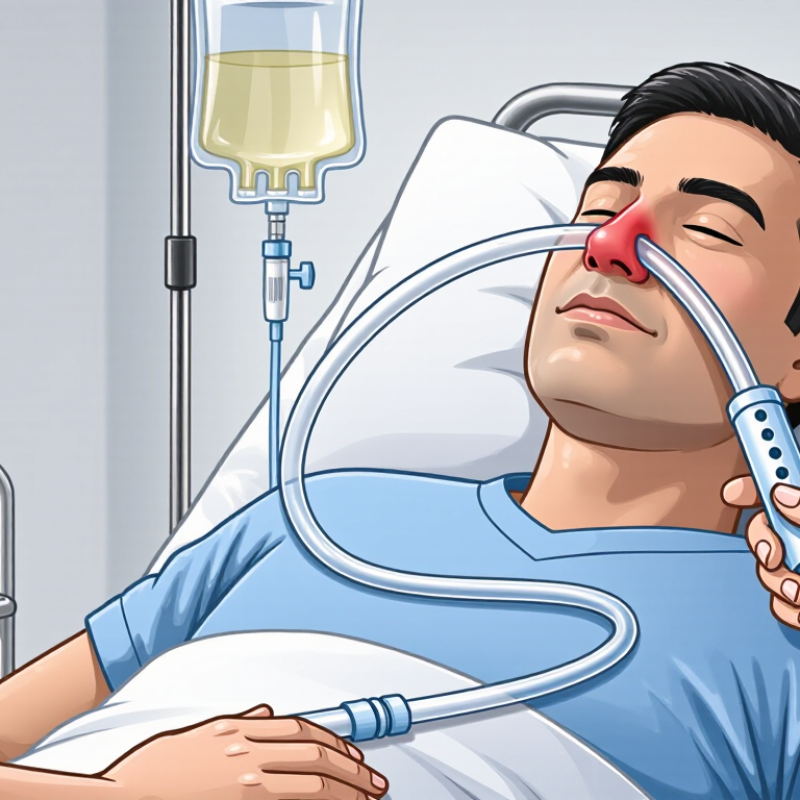
A Levin tube is a flexible, single-lumen nasogastric tube. It passes through the nose into the stomach. Its common uses include gastric decompression, drainage, medication delivery, selected feeding, and gastric lavage under clinical supervision.
The design is simple, but not casual. Most tubes include a rounded distal tip, side openings, a radiopaque line, and a proximal connector. These features support smoother insertion, fluid movement, and position checking.
Available lengths and French sizes vary by patient group and clinical purpose.
At the bedside, the tube feels soft but remains sufficiently firm for controlled placement. Its radiopaque marker helps imaging confirmation. The side holes can improve drainage, although blockage remains possible with thick contents.
WHO’s Global Patient Safety Action Plan 2021–2030 reports that about one in ten patients experiences harm during healthcare, with more than half considered preventable.
That figure reinforces the need for careful tube verification. Clinicians should follow local protocols, assess placement, and avoid relying only on external tube length. A 2023 ESPEN practical guideline also emphasizes confirming access position before nutrition begins.
The design is not foolproof. Patient anatomy, coughing, misplacement, and poor fixation can still create risks. Its usefulness depends on technique, monitoring, and the reason for insertion.
A Levin tube is a soft, single-lumen nasogastric tube. It passes through the nose, down the oesophagus, and into the stomach. Clinicians use it for gastric decompression, drainage, selected feeding, and medication delivery. The tube may relieve pressure after surgery or during intestinal obstruction. It is not a simple “nose-to-stomach” task. Anatomy, swallowing ability, consciousness, and breathing status all affect placement.
Insertion requires a trained clinician and local clinical protocols. The patient usually sits upright, with the neck slightly flexed. The clinician measures the intended length, lubricates the tube, and advances it gently during swallowing. Coughing, cyanosis, severe gagging, or breathing difficulty requires immediate reassessment. Never force it. After insertion, aspirated fluid may be tested with pH paper, according to institutional policy. Radiographic confirmation is required when aspiration is unavailable, inconclusive, or clinically unsafe.
Listening for an air “whoosh” is unreliable and should not confirm placement. NHS England’s 2016 patient safety alert reviewed 95 incidents involving misplaced nasogastric tubes, including deaths and severe harm. That figure deserves attention. Familiar routines can still fail. A tube that appears correctly positioned may enter the airway, especially in vulnerable patients.
Before feeding or medication, document the tube position, external marking, patient response, and verification method. Recheck when the tube moves, symptoms change, or doubt appears.
A Levin tube is a flexible nasogastric tube that enters through the nose and reaches the stomach. Its medical uses are practical, but never casual. Clinicians may use it to drain gastric contents during intestinal obstruction, ileus, or after selected operations. It can reduce vomiting, abdominal pressure, and aspiration risk. The tube may also collect gastric samples for assessment.
It can provide liquid nutrition or medicines when swallowing is unsafe, while the digestive tract still works. Placement must be confirmed before feeding or drug delivery. Bedside checks may include aspirate pH, tube markings, and radiographic confirmation when required by local policy. A misplaced tube can enter the airway. That error can become life-threatening quickly.
The World Health Organization’s 2022 global infection prevention report estimates healthcare-associated infections affect 7 in 100 acute-care patients in high-income countries and 15 in 100 in low- and middle-income countries. This does not measure Levin tubes specifically, but it highlights the importance of hand hygiene, clean equipment, and careful monitoring. Professional enteral-nutrition guidance also recommends reviewing tube necessity, skin condition, drainage, and patient tolerance. The device looks simple. The decisions are not. In practice, I would question every tube that remains without a clear clinical purpose.
| Dimension | Key Information | Clinical Relevance |
|---|---|---|
| Definition | A Levin tube is a flexible, single-lumen nasogastric tube inserted through the nose into the stomach. | It provides access to the stomach without requiring a surgical opening. |
| Primary Route | Nasal passage, pharynx, esophagus, and stomach. | The tube should be advanced gently and only by trained healthcare professionals. |
| Typical Size | Adult tubes are commonly selected by French (Fr) size, often within approximately 12–18 Fr; pediatric sizes are smaller. | The appropriate size depends on the patient, the intended use, the required flow, and institutional protocol. |
| Gastric Decompression | Removes accumulated air, fluid, and gastric contents from the stomach. | May help relieve abdominal distension, nausea, vomiting, and pressure associated with gastrointestinal obstruction or reduced motility. |
| Aspiration and Sampling | Allows healthcare professionals to obtain gastric contents for assessment or laboratory testing. | Samples may assist with evaluating gastric contents, bleeding, or treatment response when clinically indicated. |
| Gastric Lavage | Can provide access for gastric irrigation in carefully selected clinical situations. | Gastric lavage is not routine treatment for poisoning and requires a specific medical indication, trained staff, and risk assessment. |
| Enteral Feeding | May be used to deliver liquid nutrition, water, or prescribed medication directly into the stomach when oral intake is inadequate. | Feeding suitability depends on gastrointestinal function, aspiration risk, tube position, and the prescribed clinical plan. |
| Medication Administration | Some liquid or appropriately prepared medications may be administered through the tube. | Medication compatibility, formulation, tube obstruction risk, and drug absorption must be checked before administration. |
| Placement Verification | Tube position must be confirmed according to local clinical policy before feeding, medication delivery, or other use. | External tube markings and patient symptoms alone are not sufficient to reliably confirm gastric placement. |
| Common Indications | Selected cases of bowel obstruction, postoperative gastric decompression, severe gastric distension, impaired gastric emptying, or inability to take adequate nutrition orally. | The indication should be determined by a qualified clinician after evaluating benefits, risks, and alternatives. |
| Potential Risks | Nasal or throat irritation, nosebleed, discomfort, sinus problems, tube blockage, aspiration, and accidental airway or esophageal placement. | Prompt assessment is needed if respiratory distress, persistent coughing, cyanosis, severe pain, or unusual bleeding occurs. |
| Important Contraindications or Precautions | Extra caution may be required with suspected skull-base fracture, significant facial trauma, esophageal obstruction or injury, recent upper gastrointestinal surgery, or severe bleeding risk. | A clinician should evaluate the patient and select an appropriate route or alternative device when necessary. |
| Care and Monitoring | Monitor tube position, drainage, patency, nasal and oral mucosa, abdominal symptoms, hydration, and respiratory status. | Regular monitoring helps identify displacement, blockage, intolerance, infection, or aspiration-related complications. |
| Use by Patients | Insertion, removal, suction, feeding, and medication administration should be performed or supervised by trained healthcare personnel. | Patients should not insert, reposition, or use a Levin tube independently unless specifically trained and instructed. |
Clinical note: The choice, insertion, verification, and use of a Levin tube must follow the patient’s condition and local healthcare protocols. This table is for general educational information and does not replace professional medical assessment.
A Levin’s tube is a flexible nasogastric tube passed through the nose into the stomach. Clinicians may use it for feeding, medication delivery, gastric decompression, or sampling. Safe care begins with checking the prescribed purpose, tube position, and patient identity. Do not rely on memory. Confirm local policy before every use.
The risks are practical and serious. NHS England reported 95 incidents involving misplaced nasogastric tubes between September 2011 and March 2016. These incidents included 32 deaths and 59 cases of severe harm. Therefore, placement confirmation is essential before feeding or medication. Monitor breathing, coughing, abdominal pain, vomiting, tube markings, and skin pressure around the nostril. Stop immediately if the patient develops distress. A clear appearance does not prove correct placement. I once underestimated how quickly tape can loosen during sweating or movement; that small detail deserves more attention.
Tips: Wash hands before and after handling. Keep the tube secured, but avoid tight tape. Flush only according to the care plan and prescribed fluid volume. Record external length, checking results, intake, output, and patient tolerance. Inspect the nostril and lips each shift. The World Health Organization’s 2022 global report estimated healthcare-associated infections affect 7 in 100 acute-care patients in high-income countries. Clean technique matters. If placement, blockage, leakage, or patient condition seems uncertain, pause and contact a qualified clinician.
What Is Levin’s Tube and What Is It Used For? Risks, Limitations, and When It Should Be Avoided
A Levin tube is a flexible, single-lumen nasogastric tube. Clinicians may use it to drain stomach contents, deliver medicines, or provide short-term nutrition. Its value is practical, but placement is not a routine task. The tube can enter the airway, especially when a patient has a weak cough, reduced consciousness, or altered anatomy.
The risk is measurable. An NHS England patient-safety alert reported 95 incidents involving misplaced nasogastric tubes, including 32 deaths, between 2011 and 2016. These figures cover nasogastric tubes generally, not Levin tubes alone. NICE guideline CG32 recommends checking aspirate acidity, usually with a pH of 1 to 5.5, or using X-ray when confirmation is uncertain. Listening for air sounds is not reliable. It can create false reassurance.
Insertion should be reconsidered after facial trauma, recent nasal or esophageal surgery, severe bleeding risk, or suspected obstruction. Patients with an unprotected airway need urgent clinical assessment before feeding. A Levin tube also cannot correct delayed stomach emptying or prevent aspiration by itself. ASPEN safe-practice guidance stresses trained staff, documented confirmation, and ongoing monitoring. In real practice, these safeguards may be rushed. That is where preventable harm begins.
The chart shows a common adult Levin nasogastric tube size range. French gauge follows the relationship 1 Fr = 0.33 mm of approximate external diameter. Actual selection depends on the clinical purpose, patient anatomy, and local protocol.
Levin tubes may be used for gastric decompression, selected enteral feeding, and medication delivery. Risks include nasal bleeding, mucosal injury, aspiration, and misplacement into the airway. Blind nasal insertion should be avoided or specially assessed when basilar skull fracture, major midface trauma, esophageal obstruction or stricture, or recent caustic ingestion is suspected. Placement should be clinically supervised and confirmed according to institutional policy before use.
A flexible tube passes through the nose into the stomach. Clinicians may use it for drainage, decompression, medication delivery, selected feeding, or sampling. Its purpose must be clearly documented.
It commonly has a rounded tip, side openings, a radiopaque line, and a proximal connector. The side openings support drainage. Thick contents can still block them.
Clinicians may use the tube during intestinal obstruction, ileus, or after selected operations. Removing stomach contents can reduce vomiting and abdominal pressure. It may also lower aspiration risk.
It can deliver liquid nutrition or medicine when swallowing is unsafe. The digestive tract must still function. Placement must be confirmed before anything enters the tube.
Staff may check tube markings, gastric aspirate pH, and imaging when required. External length alone is not enough. A clear tube does not prove correct placement.
Stop using the tube if breathing difficulty, persistent coughing, vomiting, or severe abdominal pain appears. Also check for leakage, blockage, or sudden movement. Contact a qualified clinician promptly.
Wash hands before and after handling. Secure the tube without tight tape. Inspect the nostril and lips for redness, pressure, or broken skin each shift.
Record the external tube length, placement checks, fluid intake, drainage, flushing, and patient tolerance. Note changes in breathing or discomfort. Do not rely on memory.
Tape can loosen with sweating, movement, or facial moisture. A small shift may matter. I would question any tube that remains without a clear clinical purpose.
Levin's Tube is a soft, flexible nasogastric tube designed to pass through the nose, down the throat, and into the stomach. It is usually inserted by a trained healthcare professional, who carefully measures the required length, guides the tube into position, and confirms its placement before use. Depending on the patient’s condition, it may be used to remove stomach contents, relieve pressure and bloating, provide liquid nutrition or medication, or collect gastric samples for evaluation.
Safe use requires regular monitoring of tube position, drainage, patient comfort, skin condition, and signs of complications. The tube should be handled gently, kept clear according to clinical instructions, and removed when it is no longer medically necessary. Possible risks include nasal or throat irritation, bleeding, accidental placement in the airway, infection, aspiration, and discomfort. It may not be suitable for people with certain facial injuries, severe nasal obstruction, swallowing problems, or other conditions, so professional assessment is essential before insertion.