


ISO 9001 & ISO 13485 Certified WHO-GMP CE Marked Manufacturing in India since 1955
0%

Choosing the top China Closed System Suction Catheter requires more than comparing prices or attractive packaging. This device supports airway secretion management while reducing circuit disconnection during mechanical ventilation. Its value depends on reliable suction control, smooth catheter movement, secure connectors, and clear depth markings. Small details matter. A poorly fitting valve can increase handling difficulty at the bedside. An unclear label may delay an urgent procedure.

This article examines how hospitals and distributors can evaluate a Closed System Suction Catheter from Chinese manufacturers. The discussion considers material quality, catheter flexibility, protective sleeves, flushing systems, and compatibility with ventilator circuits. It also reviews evidence such as quality-management records, product testing, traceability, and applicable market approvals. These checks do not automatically prove clinical superiority. They provide a safer basis for comparison. Experienced respiratory therapists and nurses should assess the catheter during realistic simulations, including secretion clearance, glove protection, and patient repositioning.

No single product is the best for every patient. That point is easy to overlook. Pediatric care, adult intensive care, and long-term ventilation may require different catheter sizes and connector designs. Cost savings can matter, but they should never replace infection-control procedures or staff training. Manufacturer claims also deserve careful review. Some information may sound convincing yet lack independent clinical support. A responsible selection process combines bedside experience, professional guidance, regulatory documentation, and continuous performance feedback. The strongest choice is not merely the cheapest or most advertised option. It is the system that performs consistently, fits the clinical workflow, and protects patients during repeated suctioning.
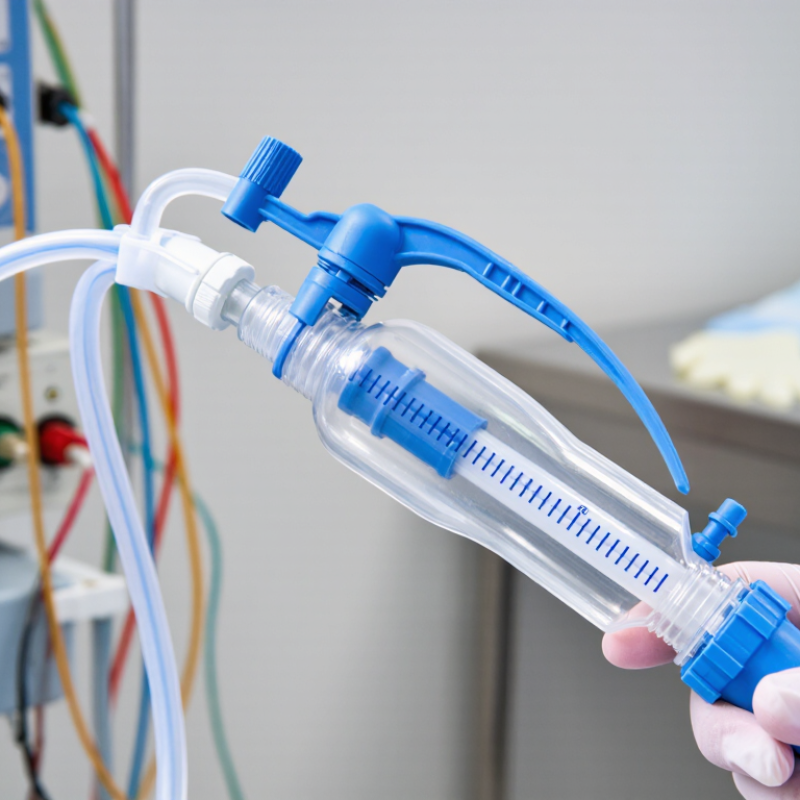
What Is the Top China Closed System Suction Catheter?

Definition and 24-Hour Role of Closed System Suction Catheters in China

A closed system suction catheter is a sterile, flexible tube enclosed in a protective sleeve. It connects to an endotracheal or tracheostomy tube without requiring repeated disconnection from the ventilator. This design helps preserve positive airway pressure and limits exposure to respiratory secretions during suctioning. In China, it is commonly considered for ventilated patients who need frequent airway clearance, especially in intensive care units and respiratory wards.

The 24-hour role is practical, not automatic. During this period, clinicians can suction through the same enclosed pathway while monitoring oxygen saturation, breath sounds, pressure changes, and secretion thickness. A nurse may check the catheter before use, flush it with sterile solution when permitted, and record the patient’s response. Fewer circuit breaks can support workflow and reduce unnecessary handling. It may also protect staff from direct splashes.

Clinical judgment remains essential. A catheter should not be used simply because twenty-four hours have passed. Replacement timing should follow facility procedures, product instructions, and the patient’s condition. Thick secretions, visible contamination, resistance, or poor suction performance may require earlier action. This point is easy to overlook.

The best choice depends on catheter size, ventilation needs, cuff management, and staff training. A short bedside assessment often reveals more than a product label. In some cases, the closed system does not solve poor humidification or ineffective coughing. Its value depends on careful technique, regular observation, and honest review of each patient’s response.

Key Components, 12–16 Fr Sizes, and Sterile Closed-Circuit Design

What Is the Top China Closed System Suction Catheter?

A strong closed system suction catheter depends on fit, control, and circuit integrity. Its key components include a sterile protective sleeve, depth markings, a swivel connector, irrigation port, suction-control valve, and protective cap. These parts let clinicians suction without disconnecting the ventilator circuit. That matters when oxygenation must remain stable.

The WHO Global Report on Infection Prevention and Control (2022) reports healthcare-associated infections in 7 of 100 acute-care patients in high-income countries. The figure reaches 15 of 100 in low- and middle-income countries. This does not prove one catheter prevents infection. It does support careful sterile handling.

Sizes from 12 to 16 Fr cover many adult applications. A 12 Fr catheter measures about 4 mm externally. A 16 Fr catheter measures about 5.3 mm. Larger is not automatically better. AARC guidance recommends limiting catheter occupancy to reduce airway blockage, commonly below half the artificial airway’s internal diameter in adults. The best choice should match tube size, secretion thickness, and suction pressure.

A clear sleeve helps staff see secretion movement.

However, visibility can decline when condensation builds. That small detail is easy to miss.

Tips: Check the French size, connector fit, depth marking, and expiration date before use. Keep the circuit closed during routine suctioning. Use the manufacturer’s sterile technique instructions. Reassess oxygen saturation, breath sounds, and secretion volume after each pass. A convenient catheter can still be wrong for a small airway.

Clinical Performance: Suction Pressure, Airway Safety, and Secretion Control

What Is the Top China Closed System Suction Catheter?

Clinical performance should guide selection, not catalog claims. In China, a strong closed system catheter should deliver stable suction pressure, smooth catheter advancement, and reliable secretion removal. The AARC Clinical Practice Guideline, 2022, recommends preoxygenation and limiting each suction pass to 15 seconds. For adults, suction pressure should generally remain below -200 mmHg. Excessive force can cause mucosal trauma, bleeding, or oxygen loss.

Airway safety depends on more than pressure. A sealed sleeve helps maintain circuit continuity and may reduce derecruitment during suctioning. However, Cochrane evidence has not shown consistent superiority for preventing ventilator-associated pneumonia. That matters. No catheter wins every airway. A clear catheter sleeve, low-resistance swivel connector, and visible secretion flow support bedside assessment. In practice, thick mucus can still obstruct the catheter. A larger lumen may improve flow, but it can also increase airway resistance.

Tips: Check the regulator before use. Preoxygenate according to the patient’s condition. Use shallow suction first, then reassess breath sounds, oxygen saturation, and secretion volume. Replace the system according to hospital policy, not habit. Record pressure, pass duration, and patient response. These small details expose weak performance quickly. Some evaluation remains imperfect, because patient anatomy, humidification, and secretion viscosity vary widely.

China Supplier Evaluation Using ISO 8836, Quality, and Compliance Metrics

What Is the Top China Closed System Suction Catheter?

Evaluating a China supplier requires more than checking price or appearance. ISO 8836:2014 provides a practical baseline for respiratory suction catheters. It covers dimensions, performance, biological safety, and test methods. Buyers should request current test reports, sterilization records, and packaging-integrity results. Lot traceability matters too. A clear batch code can shorten an investigation after a clinical complaint.

WHO’s 2022 Global Report on Infection Prevention and Control estimates that 7% of acute-care patients in high-income countries acquire at least one healthcare-associated infection. The estimate reaches 15% in low- and middle-income countries. A closed suction system should therefore support aseptic handling, secure connections, and minimal circuit disruption. Supplier audits should examine leakage, catheter smoothness, suction control, depth markings, and valve function. Small failures can become visible at the bedside.

Quality evidence should come from independent testing, not only supplier declarations. Ask for ISO 8836 alignment, risk-management files, complaint trends, and corrective-action records. Check whether production samples match validation samples. They sometimes do not. A practical evaluation can score quality consistency, regulatory documentation, usability feedback, and delivery reliability. Cost remains relevant, but it should not outrank patient-contact safety. No scorecard is perfect. Trial use by trained clinicians can expose resistance, awkward controls, or unclear markings before routine purchasing.

This framework ranks the evidence areas used to evaluate a closed system suction catheter without comparing companies or brands. ISO 8836 conformity is the primary product-specific dimension, while biocompatibility, sterile-barrier performance, quality-system controls, and regulatory documentation provide supporting evidence. The percentages are analytical evaluation weights, not supplier performance scores.

Top-Product Selection by ICU Use, 24-Hour Workflow, and Total Cost

What Is the Top China Closed System Suction Catheter?

The top closed suction catheter is not universal. ICU selection should begin with patient condition, not catalogue appearance. For high-PEEP patients, a reliable seal helps limit circuit disconnection. A rotating connector can reduce tube traction during repositioning. The AARC Clinical Practice Guideline on Artificial Airway Suctioning (2022) supports individualized suction assessment rather than automatic, scheduled suctioning. That means catheter length, control-button response, and secretion visibility matter at the bedside.

The 24-hour workflow exposes weaknesses quickly. Nurses need smooth flushing, clear depth markings, and a sleeve that does not collapse. Check compatibility with the ventilator circuit, endotracheal tube, and humidification system. Do not assume daily replacement is safer. Follow the device instructions and local infection-control policy. The CDC NHSN Patient Safety Component Manual (2024) tracks ventilator-associated events per 1,000 ventilator-days, showing why consistent ventilator care and accurate documentation matter. Small interruptions can become repeated workflow costs.

Total cost includes more than the unit price. Count staff minutes, protective equipment, waste disposal, circuit disconnections, and emergency replacements. A 2015 CDC hospital survey reported healthcare-associated infections in about one of every 31 inpatients, although that figure does not isolate suction catheters. Evidence is imperfect. I would compare three days of real ICU use, not only tender quotations. The best choice may be the catheter that nurses can operate correctly at 3 a.m.

FAQS

What is a closed system suction catheter?

It is a sterile, flexible tube inside a protective sleeve. It connects to airway tubes without repeated ventilator disconnection. This can preserve pressure and reduce secretion exposure.

Why is it used during a 24-hour period?

It allows repeated suctioning through one enclosed pathway. Staff can monitor oxygen saturation, breath sounds, pressure changes, and secretion thickness. Twenty-four hours is not an automatic replacement rule.

Which patients may need this catheter?

Ventilated patients needing frequent airway clearance may benefit. Intensive care and respiratory wards commonly consider this setup. Patient condition matters more than location.

What should clinicians check before suctioning?

They should inspect the catheter, connections, and control valve. They should assess breath sounds and oxygen saturation. Sterile flushing may be used when permitted by local procedures.

When might earlier replacement be necessary?

Thick secretions, visible contamination, resistance, or weak suction performance are warning signs. Replacement should follow facility procedures and product instructions. Waiting can be a mistake.

Does a closed system solve every airway problem?

No. It cannot correct poor humidification or ineffective coughing. The catheter may still perform poorly in a difficult case. That limitation deserves honest review.

How should a Chinese supplier be evaluated?

Request current test reports, sterilization records, and package-integrity results. Review leakage, catheter smoothness, depth markings, suction control, and valve function. Check lot traceability and complaint records.

Is a low purchase price enough?

No. Patient-contact safety should outrank price. Independent testing, risk records, corrective actions, and delivery consistency also matter. A trial with trained clinicians can reveal awkward controls or hidden resistance. No scorecard is perfect.

Conclusion

A Closed System Suction Catheter is designed to remove airway secretions while helping maintain ventilation and reducing exposure to the surrounding environment. In China, it is commonly used as part of a 24-hour respiratory-care workflow, especially for patients receiving mechanical ventilation. The system combines a catheter, protective sleeve, suction control components, flushing access, and a sterile closed-circuit structure. Common sizes include 12–16 Fr, allowing healthcare professionals to select an appropriate option according to airway conditions and secretion volume.

When evaluating products and suppliers in China, hospitals should consider suction pressure control, airway safety, secretion-clearance performance, connection reliability, and ease of use during repeated procedures. Compliance with ISO 8836 and other applicable quality-management requirements can support consistent manufacturing and clinical confidence. The most suitable product should match ICU needs, enable an efficient 24-hour workflow, reduce unnecessary circuit disconnections, and provide a reasonable total cost of ownership, including device durability, training, maintenance, and replacement frequency.

Amelia

Amelia

Amelia is a professional marketing specialist dedicated to helping customers better understand innovative products and practical solutions. With extensive knowledge of the company’s offerings, she combines market insight, product expertise, and clear communication to create informative content that......