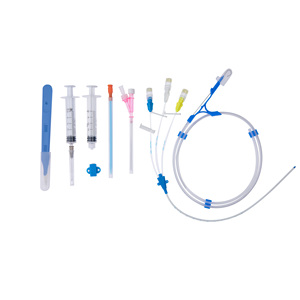
Hot Sale Surgical Lumen Central Venous Catheter Set
Precision-engineered polyurethane CVC set designed for optimal biocompatibility, featuring polyurethane radiopaque tubing and anti-kink Nitinol guidewires.
Inquire Now


Explore our certified clinical-grade instruments, critical care supplies, and surgical access cannulae manufactured under rigorous ISO 13485 and CE compliance environments.
Precision-engineered polyurethane CVC set designed for optimal biocompatibility, featuring polyurethane radiopaque tubing and anti-kink Nitinol guidewires.
Inquire Now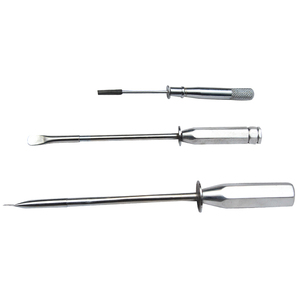
Premium German grade stainless steel laparoscopic trocar cannula set crafted for high durability, effortless tissue penetration, and repeated autoclave cycles.
Inquire Now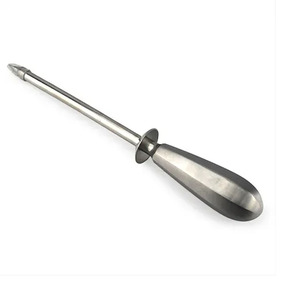
OEM-customizable veterinary cannula assembly featuring laser-engraved branding, ergonomic grip housing, and low-friction puncture sleeves.
Inquire Now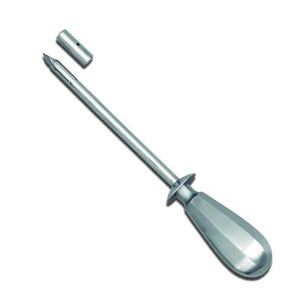
Advanced minimally invasive surgical cannula featuring dynamic sealing valves to prevent gas leakage during extended laparoscopic procedures.
Inquire Now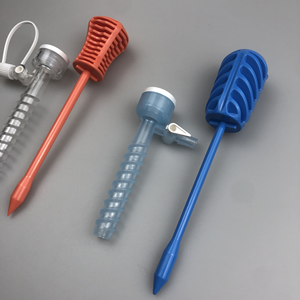
Specialized thoracic drainage and ENT arthroscopy cannula set featuring smooth tip transitions and medical-grade PVC drainage lines.
Inquire Now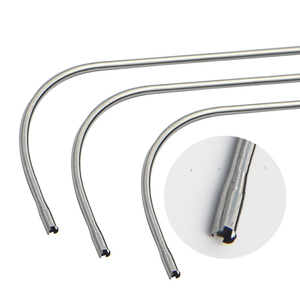
Pre-curved anatomical ENT trocar tube optimized for endoscopic sinus procedures, maximizing surgical control and patient safety.
Inquire Now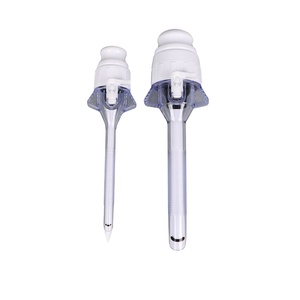
Optical bladeless laparoscopic trocar enabling direct visualization of tissue layers during entry, significantly reducing fascial trauma.
Inquire Now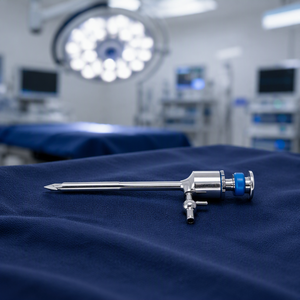
Spring-loaded protective safety shield trocar engineered for clinical laparoscopy, minimizing accidental visceral punctures upon abdominal entry.
Inquire NowIn modern operating room (OR) environments, the single-use surgical gown represents the front line of defense against cross-contamination, surgical site infections (SSIs), and pathogen transmission. Hospital-acquired infections (HAIs) present significant clinical and financial burdens to health systems worldwide. Consequently, procurement officers, hospital administrators, and international healthcare distributors must strictly evaluate medical textiles based on objective barrier properties, fluid resistance, linting characteristics, and ergonomic breathability.
China has solidified its position as the global epicenter for medical non-woven textile manufacturing, surgical gown production, and integrated procedure pack exportation. Leveraging mature petrochemical supply chains, automated ultrasonic seam welding infrastructure, and stringent cleanroom quality management systems (QMS), top-tier Chinese manufacturers supply over 60% of the world's protective barrier apparel. This comprehensive industry guide evaluates the technical parameters, regulatory frameworks, and market evolutions governing surgical gown procurement from leading Chinese exporters.
Selecting surgical gowns solely on fabric basis weight (GSM) is a critical procurement error. Barrier efficacy is dictated by polymer morphology, continuous meltblown filament density, and seam seal integrity rather than raw material thickness alone. Always mandate AAMI PB70 hydrostatic head test reports alongside spray impact values.
International regulatory agencies classify surgical gowns and protective drapes according to their liquid barrier performance in critical zones. The primary benchmark accepted across North America, Asia-Pacific, and Latin America is the ANSI/AAMI PB70 standard ("Liquid barrier performance and classification of protective apparel and drapes intended for use in health care facilities"). In Europe, the EN 13795 standard governs clinical performance metrics.
The AAMI PB70 standard establishes four distinct protection levels based on standardized fluid challenge tests. Critical zones of a surgical gown include the front chest area, seams, and sleeves from the cuff to above the elbow.
| AAMI Level | Test Methodology | Fluid Challenge Requirement | Clinical Risk Environment |
|---|---|---|---|
| Level 1 | AATCC 42 (Water Resistance: Impact Penetration) | Impact penetration ≤ 4.5g | Minimal fluid exposure (Basic patient care, standard isolation, routine biopsy). |
| Level 2 | AATCC 42 & AATCC 127 (Hydrostatic Pressure) | Impact ≤ 1.0g; Hydrostatic head ≥ 20 cm H2O | Low fluid exposure (Surgical pathology, ophthalmology, minor outpatient procedures). |
| Level 3 | AATCC 42 & AATCC 127 (Hydrostatic Pressure) | Impact ≤ 1.0g; Hydrostatic head ≥ 50 cm H2O | Moderate fluid exposure (General surgery, arthroscopy, chest tube placement, ER care). |
| Level 4 | ASTM F1671 (Viral Penetration with Phi-X174 Bacteriophage) | Zero viral penetration at 2 psi static pressure | High fluid & bloodborne pathogen exposure (Cardiovascular, trauma, orthopedic surgery, fluid-intense OR). |
The performance of a surgical gown depends heavily on its non-woven fabric architecture. Top-tier Chinese exporters utilize multi-beam spunbond-meltblown technology to create composite fabrics that balance high liquid resistance with thermal comfort.
SMS textiles feature outer layers of spunbond polypropylene (S) providing high tensile strength and tear resistance, sandwiching inner layers of micro-denier meltblown polymer (M). The meltblown core forms a dense microscopic web that acts as a physical barrier against liquid droplets and microbes while permitting water vapor gas transmission for wearer cooling.
Microporous gowns bond a non-woven fabric substrate to a breathable polyolefin film containing billions of microscopic pores per square inch. These pores are smaller than a liquid water drop but larger than a water vapor molecule, delivering 100% liquid impermeability meeting AAMI Level 4 standards without completely trapping body heat.
For high-end surgical suites demanding ultra-low linting and cotton-like drapeability, spunlace hydroentangled fabrics reinforced with impervious zone paneling (chest and sleeves) offer superior tactile comfort alongside maximum liquid containment.
Eliminates needle punctures by utilizing high-frequency acoustic energy to fuse polymer layers, preventing fluid capillary leakage along gown critical seams.
Specialized fluorochemical bath treatments lower surface tension, ensuring low-surface-tension bodily fluids bead up and slide off immediately.
Validated terminal EO cycles per ISO 11135, backed by chemical indicators, biological indicators (Bacillus atrophaeus), and residual EO analysis.
As international healthcare regulatory bodies implement stricter environmental standards and supply chain transparency guidelines, the surgical gown procurement landscape is undergoing pivotal transformations:
Escalating hospital waste disposal costs have accelerated demand for eco-friendly personal protective equipment (PPE). Leading Chinese exporters are investing in bio-based Polylactic Acid (PLA) non-wovens and single-polymer Polypropylene (PP) gowns designed for closed-loop mechanical recycling post-sterilization, reducing carbon footprints without compromising barrier safety.
Surgeon thermal stress directly affects surgical precision and decision-making during multi-hour operations. Future surgical gowns integrate phase-change materials (PCMs) and monolithic breathable polyolefin membranes that dynamically adjust moisture vapor transmission rates (MVTR) based on ambient OR temperatures and surgeon perspiration levels.
Major healthcare networks are mandating RFID tag integration within master cart cartons and individual sterile packaging pouches. This technology automated inventory tracking, prevents stock-outs, ensures precise lot-number recall execution, and streamlines hospital supply chain logistics.
Navigating international medical device sourcing requires a manufacturing partner with proven operational pedigree, deep regulatory knowledge, and massive scalable capacity. With over 65 years of clinical device manufacturing heritage, our partner facilities embody the highest global standards of quality assurance and supply security.
From raw polymer resin compounding, inline SMS fabric extrusion, automated ultrasonic cutting, to cleanroom folding and EO chamber sterilization, full vertical integration guarantees total batch consistency, eliminated middleman markups, and shortened lead times.
Our plants operate under ISO 9001 and ISO 13485 quality systems, holding WHO-GMP compliance, US FDA 510(k) registrations, and European CE marking under MDR (EU) 2017/745. Importers receive full technical documentation dossiers (STED) for seamless local drug & device registration.
AAMI Level 3 gowns undergo water pressure tests (AATCC 42 impact penetration ≤ 1.0g and AATCC 127 hydrostatic pressure ≥ 50 cm H2O), making them suitable for standard procedures with moderate fluid risk. AAMI Level 4 gowns must pass ASTM F1671 viral penetration testing with Phi-X174 bacteriophage under 2 psi pressure, guaranteeing a total physical and viral barrier against bloodborne pathogens during high-fluid surgeries.
Conventional stitched seams create thousands of needle perforations through which fluid can migrate via capillary action. Ultrasonic welding uses high-frequency vibrations to fuse thermoplastic fibers seamlessly, creating a completely liquid-tight bond that meets or exceeds the fluid resistance of the base fabric itself.
Each shipment is backed by comprehensive quality dossiers including ISO 13485 certificates, CE Declarations of Conformity, batch sterilization validation reports (ISO 11135), EO residual test data (ISO 10993-7), biocompatibility test results (cytotoxicity, sensitization, irritation), and lot-specific COAs.
We provide comprehensive OEM capabilities including custom gown dimensioning, sleeve cuff modifications, color-coded neck bindings for size identification, custom multi-language sterile pouch printing, branded master cartoning, and customized surgical procedure pack assembly.
Following EO gas chamber exposure, products undergo controlled aeration cycles. Gas chromatography testing is conducted on every batch to verify that residual Ethylene Oxide (EO) and Ethylene Chlorohydrin (ECH) levels fall strictly below the maximum allowable thresholds specified by ISO 10993-7.
Partner with China's leading certified surgical apparel and medical disposables manufacturer. Contact our international export engineering desk today for detailed pricing, container lead times, and sample kits.