


Precision-engineered medical instruments and airway accessories optimized for clinical efficacy, patient safety, and seamless institutional integration.
In modern clinical anesthesia, resuscitation, and non-invasive ventilation (NIV), the facial anesthesia mask serves as the primary critical interface between patient biology and mechanical ventilation circuits. As healthcare systems globally face mounting pressure to balance patient safety, infection control, and procurement cost optimization, China has solidified its positioning as the primary global hub for high-precision medical polymer fabrication, automated mask molding, and international supply chain integration.
This industry report examines the structural evolution of anesthesia mask manufacturing in China, providing procurement directors, hospital supply chain managers, and OEM distributors with technical insights required to evaluate OEM/ODM partners. By leveraging high-precision injection tooling, medical-grade liquid silicone rubber (LSR) processing, and compliant Ethylene Oxide (EO) terminal sterilization facilities, leading Chinese manufacturers deliver solutions meeting rigorous international standards such as ISO 13485, CE MDR (EU 2017/745), and US FDA 510(k) clearances.
Hospital procurement officers and overseas distributors face strict regulatory environments requiring continuous auditability. Modern anesthesia masks must achieve an airtight facial seal at minimal inflation pressures to prevent gas leakage (e.g., volatile anesthetic agents such as Sevoflurane and Isoflurane), protect clinical personnel from occupational exposure, and eliminate trigeminal nerve pressure injuries in patients during prolonged anesthesia maintenance.
Choosing a certified Chinese exporter backed by over six decades of polymer technology heritage ensures reliable supply continuity, custom packaging configurations, multilingual Instructions for Use (IFU), and comprehensive technical dossiers for local drug authority registrations.
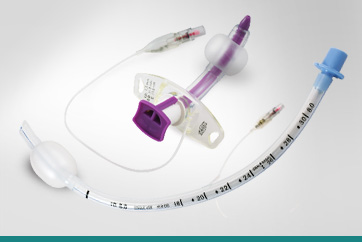
Evaluating an anesthesia mask supplier requires evaluating their material processing capabilities, cushion engineering, dead space metrics, and connector tolerance standardizations per ISO 5356-1 (22mm and 15mm conical connectors).
| Feature Parameter | Single-Use PVC Anesthesia Masks | Reusable Liquid Silicone (LSR) Masks | Endoscopic / Procedural Masks |
|---|---|---|---|
| Primary Material | DEHP-Free / Phthalate-Free PVC | 100% Medical-Grade Liquid Silicone Rubber | High-Transparency Polycarbonate & Silicone Membrane |
| Cushion Technology | Pre-inflated / Adjustable Air Cushion | Ultra-Soft Anatomical Solid/Air Cushion | Flexible Dual-Port Access Diaphragm |
| Dead Space Volume | Optimized Low Dead Space (20ml - 140ml) | Ultra-Low Anatomical Contour Fill | Integrated Endoscopy Port Chamber |
| Sterilization Method | Terminal Ethylene Oxide (EO) Sterilized | Autoclavable (134°C) / Gamma Compatible | Individual Sterile Blister Packaging (EO) |
| Target Application | Routine OR Surgery, Emergency Resuscitation | Repeat ICU Ventilation, Specialty Ped-Care | Bronchoscopy, Transesophageal Echocardiography |
| Regulatory Standards | ISO 10993 Biocompatible, CE, FDA, ISO 5356-1 | ISO 10993 Biocompatible, REACH, RoHS compliant | CE Class IIa, ISO 13485 QMS Controlled |
* Note: All masks manufactured by top-tier Chinese vendors feature color-coded hook rings (Size 0 Infant through Size 6 Adult XL) to enable rapid visual identification in high-stress clinical environments.
The global market for general anesthesia and critical care disposables is undergoing rapid technological and regulatory shifts. Procurement directors must anticipate these key trends when establishing multi-year vendor agreements with Chinese OEMs:
Global regulatory bodies (EU REACH, US EPA) are accelerating restrictions on traditional phthalate plasticizers (DEHP/DINP). Modern production lines in China have converted entirely to bio-based plasticizers and TOTM (Trioctyl Trimellitate) PVC formulations, eliminating chemical leaching risks during volatile gas delivery.
Clinical safety guidelines demand real-time visual assessment of patient lip color, vomitus, or condensation buildup. Next-generation anesthesia masks incorporate crystal-clear medical polycarbonate and high-clarity PVC alloys to give anesthesiologists uninterrupted visual monitoring during induction.
Advanced 3D facial scanning data from diverse global populations (Asian, Caucasian, African, Hispanic) has fueled the engineering of universal anatomical cushion profiles. These soft air cushions conform to facial contours with minimal strap tension, preventing facial pressure necrosis in extended surgical procedures.
Top-tier Chinese manufacturers operate controlled cleanroom environments, maintaining total control over material procurement, precision tooling, cleanroom assembly, and laboratory testing.
Leading suppliers implement robust quality assurance protocols from raw resin entry to final packaging release:
Addressing critical procurement, compliance, packaging, and manufacturing inquiries for international medical device distributors and hospital buying groups.
Leading Chinese medical manufacturers maintain ISO 13485 and ISO 9001 quality management certificates. Product families typically carry CE mark certification under EU MDR 2017/745, WHO-GMP compliance certificates, and US FDA 510(k) clearances. Manufacturers provide complete technical documentation, CE certificates of conformity, and test reports to support local regulatory registration in target export countries.
Exporters offer end-to-end OEM and private-label programs. This includes custom pouch printing (medical-grade paper-film blister packaging or tear-open PE pouches), customized shelf box graphics, master export shipping cartons, and multilingual Instructions for Use (IFU) tailored to specific regional markets across Europe, Latin America, Africa, the Middle East, and Southeast Asia.
Single-use masks undergo terminal sterilization with Ethylene Oxide (EO) inside validated industrial sterilizers operating according to ISO 11135 standards. Each production batch includes biological and chemical indicators alongside EO residual analysis reports. Sterilized pouches feature external chemical color indicators, lot numbers, manufacturing dates, and shelf-life expiry dates for clear inventory tracking.
Manufacturers produce standard clinical size ranges according to international color-coding standards: Size 0 (Neonate - White/Pink ring), Size 1 (Infant - Yellow ring), Size 2 (Pediatric - Green ring), Size 3 (Adult Small - Yellow/Red ring), Size 4 (Adult Medium - Red ring), Size 5 (Adult Large - Blue ring), and Size 6 (Adult Extra Large - Black ring). Masks can be configured with or without check valves for air cushion volume adjustment.
Standard export MOQs for branded standard items typically range from 1,000 to 5,000 units depending on the mask size. Custom OEM private label orders generally require an MOQ of 10,000 units per size to support dedicated packaging runs. Delivery lead times average 20 to 35 days post order confirmation and artwork approval, with sea, air, and express logistics handling.
Engineering teams utilize computational fluid dynamics (CFD) software during mold design to minimize internal mask volume without compromising anatomical coverage. This low dead-space architecture reduces rebreathing of carbon dioxide ($CO_2$), while soft-cushion profiles ensure low-pressure sealing that protects facial tissue during extended surgery.