


Precision-manufactured sharps, safety cannula assemblies, and endoscopic instruments built to international bio-compatibility standards.
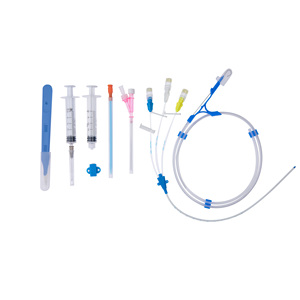
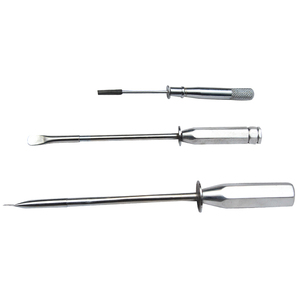
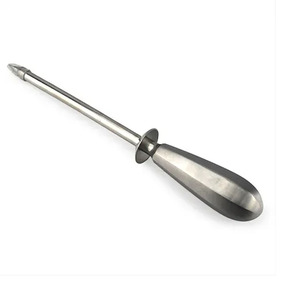
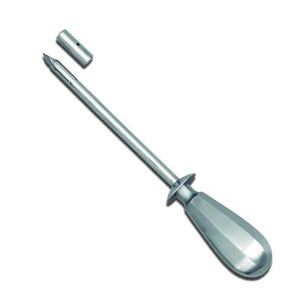
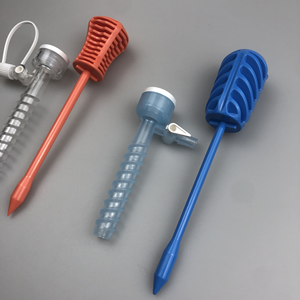
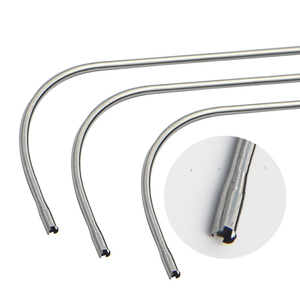
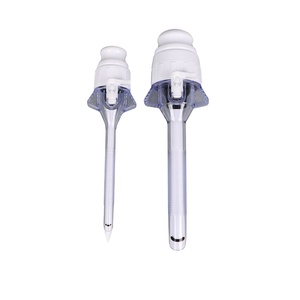
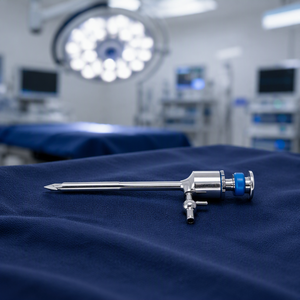
In modern clinical environments, safety-engineered injection devices, needle-free access systems, and advanced surgical cannulas form the frontline defense against accidental needlestick injuries (NSIs) and hospital-acquired bloodborne pathogen transmissions. As a preeminent China wholesale safety needle supplier and exporter backed by over six decades of manufacturing heritage, our enterprise integrates polymer engineering, metallurgy, and automated cleanroom assembly to yield clinical-grade safety needles and trocar systems compliant with global regulatory mandates including ISO 13485, CE Marking, WHO-GMP, and US FDA 510(k) guidelines.
Needlestick injuries pose a profound occupational hazard to healthcare workers worldwide. Regulatory frameworks, such as the OSHA Bloodborne Pathogens Standard in the United States and the European Union Council Directive 2010/32/EU, strictly enforce the procurement of medical sharps incorporated with integrated safety-engineered protection mechanisms. Our manufacturing operations meet these stringent international standards by deploying automated, high-speed fabrication lines that produce active and passive safety hypodermic needles, blood collection needles, AV fistula safety needles, Huber safety needles, and laparoscopic surgical trocars with engineered protective sheaths.
Clinical Insight & Information Gain: Passive safety needle designs exhibit a 64% higher compliance rate among clinical personnel compared to active safety mechanisms, as auto-retraction eliminates the dependency on manual activation post-injection, thereby virtually eliminating secondary exposure risk during rapid intervention scenarios.
The structural integrity of a safety hypodermic needle relies upon three core engineering pillars: needle point geometry, tube metallurgy, and safety locking hub mechanisms. Our production process leverages medical-grade AISI 304 and 316L stainless steel drawn into thin-wall and ultra-thin-wall cannulas. This maximizes internal lumen diameter to optimize fluid flow rates while minimizing outer diameter for reduced tissue trauma during venipuncture or subcutaneous administration.
Precision lancet grinding technology utilizes multi-axis CNC optical grinding to form a 5-bevel or 3-bevel needle tip, dramatically reducing penetration force and patient insertion pain.
Audible, tactile click mechanisms confirm permanent shield engagement over the contaminated sharp, preventing manual override or accidental re-exposure.
Micro-bonded hydrophobic silicone lubrication applied uniformly along the stainless steel tube lowers drag force during tissue penetration, ensuring fluid catheter introduction.
International procurement teams require transparent technical documentation when evaluating B2B medical disposable suppliers. Every lot produced in our cleanrooms undergoes rigorous physical, chemical, and biological verification in strict alignment with ISO 7864 (Sterile hypodermic needles for single use), ISO 23908 (Sharps injury protection), and ISO 10993 (Biological evaluation of medical devices).
| Parameter | Standard Specification | Testing Methodology / Regulatory Validation |
|---|---|---|
| Cannula Material | AISI 304 / 316L Surgical Stainless Steel | Spectrometric Grade Verification, ISO 9626 compliance |
| Gauge Spectrum | 14G to 31G (Color-Coded ISO 6009 Hubs) | Visual & Automated Optical Measurement System |
| Safety Mechanism Type | Active Hinged Shield / Passive Auto-Retracting | ISO 23908 Simulated Clinical Activation Testing |
| Lubrication | Medical Grade Dow Corning Silicone (USP Class VI) | Atomic Absorption Spectrophotometry (Extraction Limits) |
| Sterilization Assurance Level (SAL) | SAL 10⁻⁶ via Ethylene Oxide (EO) or Gamma Irradiation | ISO 11135 Validation with Biological Indicators (B. atrophaeus) |
| Endotoxin Limits | < 20 EU/device (Non-pyrogenic) | Limulus Amebocyte Lysate (LAL) Reagent Assay |
| Biocompatibility | Cytotoxicity Zero, Non-Sensitizing, Non-Irritant | ISO 10993-5, 10993-10, 10993-11 Bio-Safety Dossier |
For international hospital buyers, selecting between active hinged-shield needles and passive automatic spring-retraction needles involves evaluating clinical workflow, training requirements, and unit procurement costs. Active safety needles require the clinician to manually snap a protective sheath over the needle tip using a single-handed thumb maneuver against a hard surface. Passive safety needles, conversely, feature an internal spring mechanism triggered automatically upon full plunger depression or insertion depth completion, housing the sharp instantly within the syringe barrel without user intervention.
While active safety needles offer lower unit costs suitable for high-volume public hospital tenders, passive safety systems eliminate human error entirely, offering superior risk mitigation in emergency, ICU, and pediatric wards. As a comprehensive OEM exporter, we provide fully customized packaging, color coding, and hub configurations across both safety architectures.
The global medical disposables supply chain is undergoing structural shifts driven by regulatory mandates, sustainability initiatives, and the decentralization of care into home health environments. Healthcare procurement directors and B2B medical importers must navigate four dominant trends over the coming decade:
While North American and Western European healthcare networks achieved near 100% safety needle adoption over the past two decades, regional health authorities in Asia-Pacific, Latin America, and the Middle East are rapidly instituting mandatory safety sharp regulations. Wholesale importers establishing early supply lines with verified China OEMs stand to gain market share as tender requirements transition from conventional hypodermic needles to safety-engineered alternatives.
Environmental stewardship is reshaping medical plastic manufacturing. Traditional polypropylene syringe barrels and safety shields are giving way to bio-attributed polyolefins and recyclable polymer matrices that withstand Ethylene Oxide sterilization without sacrificing optical clarity or mechanical strength. Sustainable medical packaging—utilizing lightweight Tyvek® peel pouches and solvent-free acrylic adhesives—is becoming a key differentiator in international hospital bids.
To enhance device traceability and prevent counterfeit medical supplies from entering global hospital inventories, international buyers demand Unique Device Identification (UDI) barcodes printed directly on primary pouch packaging and secondary shipper cartons. Direct GS1-compliant Datamatrix coding facilitates automated hospital inventory management, recall readiness, and streamlined customs clearance.
Volatile global logistics have emphasized the necessity of partnering with high-capacity, vertically integrated manufacturers. By maintaining in-house tool rooms, tube-drawing mills, plastic injection molding centers, and EO sterilization chambers, our China manufacturing facility ensures uninterrupted delivery schedules, stable pricing structures, and agile private-label customization.
With an operational legacy tracing back to 1955 under the Sterimed Group legacy, our manufacturing facilities represent the pinnacle of medical device production engineering. Spanning tens of thousands of square meters of ISO Class 8 (Class 100,000) cleanroom environments, our automated production lines handle raw material intake to final sterile barrier packaging with minimal human contact.
Supplying major hospital networks, government health ministries, and medical distributors across 90+ countries across North America, Europe, LATAM, EMEA, and Asia-Pacific.
Full private-label support including specialized gauge sizes, custom hub colors, multilingual IFUs, branded blister cards, and tailored shipping configurations.
Optical machine vision inspection systems audit 100% of needle bevels and safety shields prior to packaging, ensuring zero defective units reach clinical hands.
Request factory-direct pricing, technical dossiers, CE/ISO documentation, or complimentary evaluation samples for your hospital network or distribution territory.