


Direct OEM/ODM manufacturing of sterile disposable and reusable hypodermic needles engineered to ISO 7864 and ISO 9626 international standards.
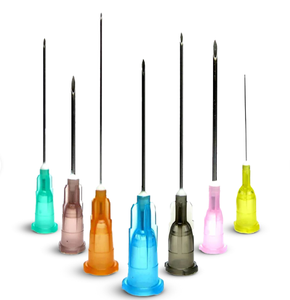
Precision-ground AISI 304 stainless steel cannula featuring ultra-thin wall technology, triple-bevel geometry, and universal Luer Lock/Slip hub fitting.
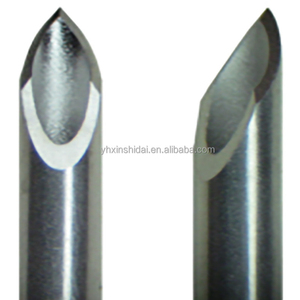
Specialized custom-diameter stainless steel tubing manufactured for non-standard clinical procedures, laboratory automation, and specialized OEM devices.
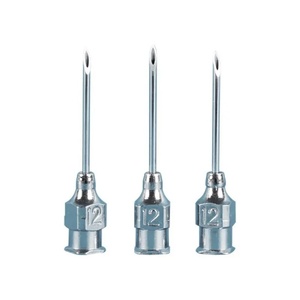
Heavy-duty reusable livestock needles equipped with plated brass hubs, reinforced wall thickness, and high resistance to bending during mass farm vaccination.
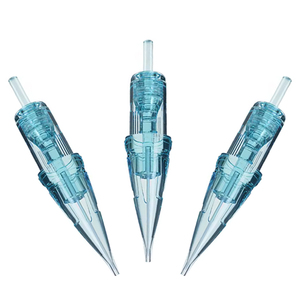
High-volume sterile packaged injection needles available across all gauge sizes (16G–30G) with silicone lubricant coating for minimal insertion trauma.
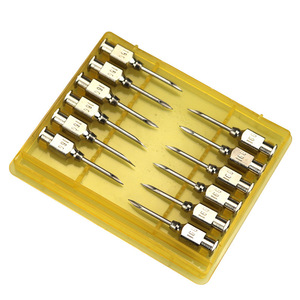
Autoclavable veterinary needles with standard Luer Lock connection, engineered specifically for bovine, swine, and ovine vaccination programs.
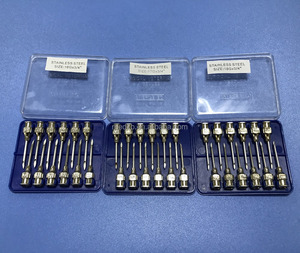
Features rigid square hub options and extra-sharp bevel geometry designed to handle thick animal hide while maintaining fluid flow velocity.
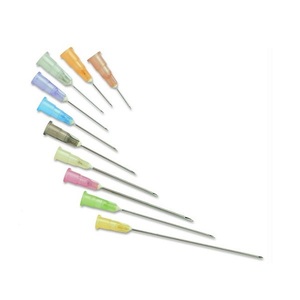
Color-coded individual blister pack needles ensuring total sterility, high tensile strength cannula, and zero cross-contamination risk for livestock care.
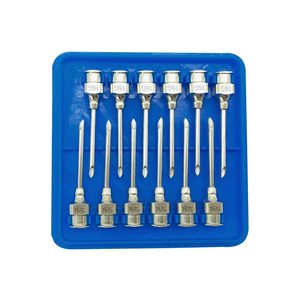
Heavy-gauge 16G x 3/4" vaccine needles packaged in eco-friendly bulk dozen boxes, designed for fast-paced automated multi-dose syringe injectors.
An in-depth analysis of metallurgical engineering, quality compliance, and automated manufacturing dynamics in China's medical device export sector.
The global hypodermic needle market is experiencing unprecedented demand driven by expanding immunization programs, the rise of self-administered biopharmaceuticals, and growing livestock health security needs. China has established itself as the world’s leading hub for medical-grade hypodermic needle fabrication, representing over 60% of worldwide OEM and ODM cannula export volume. This dominance is not merely built on scale; it is rooted in advanced metallurgical engineering, fully automated cleanroom assembly lines, and rigorous adherence to global regulatory frameworks including EU CE MDR, US FDA 510(k), and WHO-GMP guidelines.
For international procurement directors, OEM brand managers, and medical device importers, evaluating China's hypodermic needle factories requires a granular understanding of raw material sourcing, cannula micro-machining, silicone coating technology, and sterilization validation. Top-tier Chinese manufacturers utilize medical-grade AISI 304 and 316L stainless steel tubing, manufactured under strict wall-thickness tolerances according to ISO 9626 specifications. This technical white paper provides the strategic insights necessary to navigate supplier qualification, technical audit criteria, and future market trends.
Comprehensive standard reference guide for medical and veterinary hypodermic needle dimensions according to ISO 6009 color coding.
| Gauge Size | ISO Color Code | Nominal Outer Dia. (mm) | Wall Thickness Options | Recommended Clinical & Veterinary Application |
|---|---|---|---|---|
| 16G | White | 1.60 ± 0.02 | Regular / Heavy Wall | Veterinary mass livestock vaccination, blood transfusion, dense fluid draw |
| 18G | Pink | 1.20 ± 0.02 | Regular / Thin Wall (TW) | Medication compounding, blood collection, veterinary swine/bovine care |
| 20G | Yellow | 0.90 ± 0.01 | Thin Wall / Extra Thin Wall | Intramuscular injections, IV push medications, equine veterinary care |
| 21G | Green | 0.80 ± 0.01 | Regular / TW / UTW | Standard venipuncture, routine adult intramuscular injections |
| 22G | Black | 0.70 ± 0.01 | Thin Wall (TW) | Diagnostic blood sampling, pediatric/geriatric intramuscular therapy |
| 23G | Blue | 0.60 ± 0.01 | Regular / Thin Wall | Subcutaneous injections, delicate vein access, vaccine administration |
| 25G | Orange | 0.50 ± 0.01 | Ultra-Thin Wall (UTW) | Pediatric vaccinations, subcutaneous insulin delivery, minor local anesthesia |
| 27G–30G | Grey / Yellow / Brown | 0.40 to 0.30 | Micro-Wall / UTW | Ophthalmology, cosmetic dermatology, fine mesotherapy, micro-injections |
Key technological shifts reshaping international medical disposable supply chains and purchasing criteria.
Global healthcare regulations (including OSHA needle-stick prevention protocols and EU Directive 2010/32/EU) are mandating the adoption of active and passive safety needles. Chinese exporters are shifting manufacturing capacity toward integrated shield mechanisms and needle-retraction syringes to fulfill government tenders worldwide.
To reduce patient injection discomfort and accommodate high-viscosity biologics, procurement is shifting heavily toward UTW and Extra Thin Wall (ETW) cannulas. By widening internal lumen diameter without increasing external gauge size, fluid flow rates improve by up to 35% under lower manual extrusion pressure.
With millions of needles used daily, environmental footprint reduction is a top priority for European and North American distributors. Top Chinese factories are implementing medical-grade recyclable paper-film blister packs, reduced-volume transport packaging, and energy-efficient automated sterilization cycles.
Building buyer confidence through audited cleanroom protocols, precision cannula grinding, and batch traceability.
Superior patient comfort relies directly on needle point sharpness. Leading Chinese production facilities employ automated multi-stage grinding wheels capable of creating precise 3-bevel, 5-bevel, or lancet point geometries. Furthermore, inline high-speed CCD camera vision systems inspect 100% of cannulas for burrs, hooks, and bevel deformities at speeds exceeding 1,000 units per minute.
Hypodermic needles are critical invasive devices requiring total sterility and non-pyrogenic guarantees. Automated injection molding of polypropylene hubs, adhesive dosing, ultrasonic washing, and automated packaging take place within ISO Class 8 (Class 100,000) cleanrooms. Terminal sterilization is executed via validated Ethylene Oxide (EO) processing per ISO 11135 standards.
Answers to critical technical, regulatory, and commercial inquiries encountered during factory evaluation and contract negotiation.
Qualified manufacturers must hold ISO 13485 (Medical Devices Quality Management System) and ISO 9001 certifications. For European export, compliance under the EU MDR 2017/745 with a CE Certificate issued by a recognized Notified Body is required. For US imports, FDA 510(k) clearance and establishment registration are mandatory. Additional certifications include WHO-GMP for tender eligibility across Latin America, Africa, and Southeast Asia.
Medical disposable needles feature polypropylene plastic hubs, ultra-thin wall cannulas, and single-use blister packaging designed for human skin and tissue elasticity. Veterinary needles, especially reusable types, utilize heavy-duty chrome-plated brass hubs or reinforced aluminum hubs, thicker steel walls (heavy-wall cannula) to resist bending against dense animal hides, and are designed for repeated steam autoclave sterilization.
Standard factory MOQ for stock gauge sizes usually starts at 100,000 units per size. For customized OEM private-label packaging (custom blister printing, inner boxes, and master shipping cartons with branded artwork), MOQs generally range from 300,000 to 500,000 units. Custom odd-size cannulas or specialized bevel geometry may require custom tooling setup fees.
Reputable factories provide a full Technical Master File including ISO 10993 Biocompatibility Reports (Cytotoxicity, Sensitization, Systemic Toxicity), ISO 7864 Physical Test Reports (Needle penetration force, bond strength between hub and tube, flow rate performance), Sterilization Validation Dossiers (ISO 11135), and Certificate of Analysis (CoA) for each batch.
Luer Lock hubs feature a threaded collar mechanism that securely twists onto the syringe tip, preventing high-pressure needle detachment during dense medication delivery or high-viscosity injections. Luer Slip hubs rely on friction fit and are widely used for routine rapid venipuncture or low-pressure fluid administration. Both conform to ISO 80369-7 dimensions for universal compatibility.
Sterile medical hypodermic needles packaged in medical-grade paper/film blister pouches carry a validated shelf life of 5 years. Products must be stored in a dry, well-ventilated warehouse away from direct sunlight, corrosive chemical fumes, and extreme temperature fluctuations (recommended range: 10°C to 30°C, relative humidity < 80%).
Request technical specifications, sample kits, factory audit dossiers, or factory-direct OEM price quotations tailored to your market requirements.
Contact Us