


Explore our export-ready high pressure flexible hose lines, hydraulic diagnostic tools, and custom polyurethane spray systems certified for European and Nordic industrial standards.
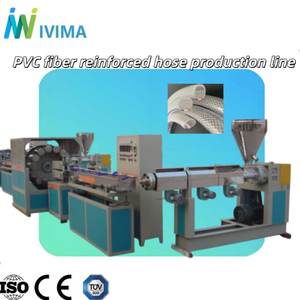
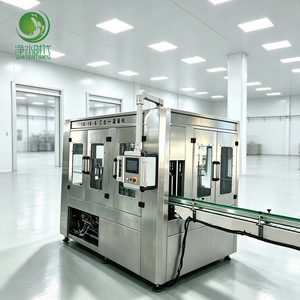
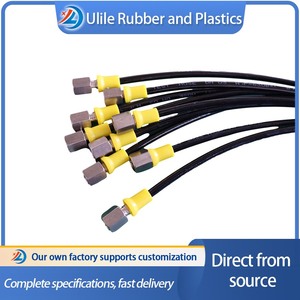
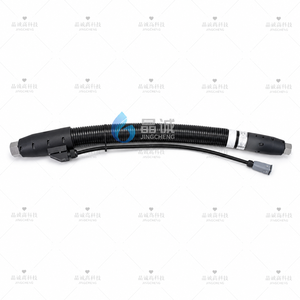
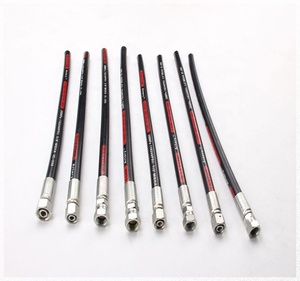
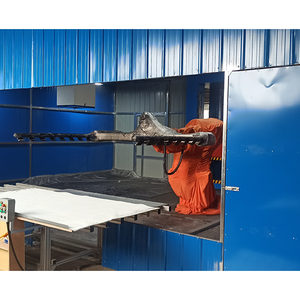
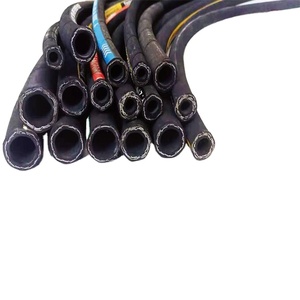
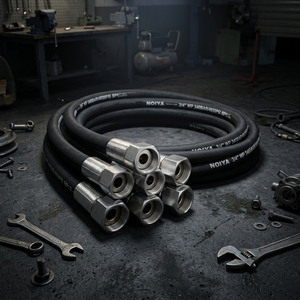
The Kingdom of Norway represents one of the world's most demanding engineering environments for fluid power transmission and high-pressure hose assemblies. Driven by sprawling offshore energy projects across the North Sea, Continental Shelf, and Barents Sea, alongside rapid expansions in deep-water salmon aquaculture and subzero onshore hydroelectric infrastructure, Norwegian OEMs and maintenance buyers require high-pressure flexible fluid lines that vastly exceed standardized commercial tolerances.
As a premier CE-certified pressure line manufacturer and global exporter, our enterprise leverages over six decades of advanced polymer compounding, wire-braiding metallurgy, and cleanroom assembly discipline. We engineer high-pressure flexible lines, micro-bore test diagnostic hoses, and thermal anti-static transfer systems specifically adapted to satisfy the stringent requirements of Norwegian Standard (NS-EN), European Pressure Equipment Directive (PED 2014/68/EU), and NORSOK M-650 manufacturing verification protocols.
Technical Insight for Norwegian Procurement Engineers: Standard rubber pressure hoses frequently experience glass transition embrittlement when exposed to ambient Barents Sea winter temperatures down to -40°C. Our specialized Nordic-grade NBR/PTFE matrix maintains micro-flexibility under severe thermal cycling while holding a minimum 4:1 safety factor against hydrostatic burst pressures up to 630 Bar.
A critical consideration in high-pressure hose specification is the structural interaction between the inner fluid-barrier tube, the tensioned reinforcement sheath, and the outer protective elastomer cover. In high-pressure hydraulic lines (such as SAE 100R2AT and EN 853 2SN), dynamic pressure spikes—known as hydraulic shock or water hammer—can create transient loads reaching 150% of nominal working pressure within milliseconds.
To resist structural delamination and mechanical fatigue under cyclic loading, our manufacturing processes incorporate high-tensile brass-coated steel wire spiraling alongside heat-stabilized synthetic yarn reinforcement. For subsea micro-measuring systems operating at 630 Bar, micro-bore construction utilizing polyamide (PA) cores wrapped in Kevlar/aramid fiber braiding provides minimal volumetric expansion, ensuring instantaneous pressure gauge response during diagnostic calibration.
| Pressure Line Category | Inner Core Material | Reinforcement Structure | Working Pressure (BAR) | Operating Temp Range | Key Compliance Standard |
|---|---|---|---|---|---|
| 630 Bar Micro Test Hose | Polyamide (PA 12) | Aramid / High-Tensile Steel Braid | Up to 630 BAR | -40°C to +100°C | ISO 19879 / DIN 2353 |
| 2Wire Hydraulic (100R2AT) | Oil-Resistant Synthetic NBR | 2-Braid High-Tensile Steel Wire | 160 to 400 BAR | -40°C to +125°C | EN 853 2SN / SAE 100R2AT |
| Heated Anti-Static Line | Smooth Bore PTFE | Stainless Steel 316 Braid + Heating Coil | Up to 250 BAR | -50°C to +230°C | ATEX / IECEx / CE PED |
| Reinforced Rubber Air Line | Industrial NBR/SBR Blend | High-Purity Polyester Fiber Yarn | 20 BAR | -30°C to +80°C | ISO 2398 / EN 559 |
| PU Foaming Spray Line | Solvent-Resistant Polyurethane | Braided Synthetic Fiber Core | 150 to 280 BAR | -20°C to +90°C | CE Machinery Directive |
Exporting industrial pressure lines to Norway requires continuous adherence to European Union and European Economic Area (EEA) regulatory architecture. Although Norway is not an EU member state, its position within the EEA Agreement mandates strict compliance with relevant CE directives and Nordic harmonized standards:
1. Pressure Equipment Directive (PED 2014/68/EU): Pressure lines with maximum allowable pressures exceeding 0.5 bar must satisfy fundamental safety requirements regarding design pressure calculations, material traceability, and hydrostatic proof testing. Our manufacturing lines undergo Module H full quality assurance auditing, granting full CE clearance for liquid and gas transmission lines delivered to Norwegian ports.
2. NORSOK M-630 & M-650 Metallurgical Certification: For pressure line end-fittings, stainless steel 316L and duplex connectors utilized in offshore marine environments undergo rigorous pitting resistance equivalent number (PREN ≥ 40) verification to guarantee immunity against chloride stress corrosion cracking in seawater.
3. ISO 8031 Electrical Resistance and Static Dissipation: In explosive atmospheres—such as offshore oil decks and polyurethane spray foam processing—electrostatic charges generated by high-velocity fluid flow present ignition risks. Our anti-static smooth bore lines integrate conductive wire bonding or carbon-black impregnated layers delivering electrical resistance lower than 10^6 ohms per meter.
From the offshore oil hubs of Stavanger to the coastal aquaculture sites of Bergen and Tromsø, explore how our pressure lines deliver uncompromised operational uptime in Norway’s primary industrial sectors.
Off-shore drilling rigs operating in the Norwegian Continental Shelf demand 630 Bar micro high-pressure test hoses for hydraulic blow-out preventer (BOP) control panels, diagnostic sampling manifolds, and ROV hydraulic circuits. Stainless steel 316 braided construction prevents saltwater oxidation while maintaining pulse stability.
Norway's salmon farming industry relies heavily on high-pressure water jetting lines to clean submerged sea-cage netting without toxic antifouling chemicals. Our IVIMA High-Pressure PVC Fiber lines and 2-wire rubber hydraulic hoses withstand continuous 200–350 Bar water hydro-blasting, resistant to fish oil, ozone exposure, and mechanical abrasion on vessel decks.
Powering over 90% of Norway's grid, hydroelectric installations require heavy-duty hydraulic lines (100R2AT / 2SN) to actuate massive turbine governor valves and spillway gates. Operating reliably in unheated alpine tunnels down to -40°C, our low-temp elastomeric compounds prevent fluid leakage during sub-arctic freeze-thaw cycles.
In Norwegian shipyards (e.g., Ålesund and Ulsteinvik), HPM20S high-pressure spray foaming lines apply polyurethane insulation to refrigerated cargo holds and LNG carrier hulls. Heated smooth-bore PTFE pressure lines maintain exact chemical temperature profiles up to 230°C, ensuring optimal chemical reaction kinetics.
As Norway accelerates its transition toward green maritime technology, zero-emission industrial processing, and offshore wind development, fluid pressure transfer equipment must adapt to new operational realities.
With Norway targeting net-zero maritime operations, traditional diesel-driven hydraulic hydro-blasters are being replaced by high-voltage electric pump skid units. This shifts demand toward high-flexibility, noise-dampening PVC and synthetic rubber pressure lines capable of handling continuous 20–350 Bar duty cycles without pressure drop.
Norway's landmark "Northern Lights" Carbon Capture and Storage (CCS) project requires pressure lines capable of transporting supercritical CO2 and compressed gaseous hydrogen. Stainless steel braided PTFE lines are gaining market share due to zero chemical reactivity and resistance to explosive decompressions (AED).
Norwegian offshore safety regulations (PSA Norway) increasingly encourage predictive maintenance. Modern high-pressure hose assemblies exported to Norway feature embedded RFID chips and micro-bore test ports, enabling digital inspection logging during mandatory annual pressure integrity tests.
Building on over 65 years of continuous industrial polymer and pressure vessel production, our state-of-the-art facilities combine precision automation, ISO 9001 and ISO 13485 cleanroom discipline, and 100% batch hydrostatic verification.
Complete quality control over polymer mixing, inner tube extrusion, wire braiding tensioning, and outer vulcanization—ensuring zero wall thickness variation.
Every export batch intended for European markets undergoes dynamic impulse testing to DIN EN ISO 1402 standards up to 1.5x working pressure prior to dispatch.
Comprehensive material mill inspection certificates, batch lot tracking, and CE compliance declarations provided with every sea/air shipment to Oslo or Bergen.
Custom low-temperature nitrile and silicone rubber blends certified to maintain burst resistance and mechanical flexibility in Arctic climatic zones.
Fully customized end-fittings (BSP, NPT, JIC, Metric, Flanged), custom hose length cutting, heat shrink branding, and private label packaging for Scandinavian distributors.
Established freight channels offering DDP/CIF delivery directly to major Norwegian ports including Oslo, Stavanger, Bergen, Trondheim, and Hammerfest.
Direct technical answers addressing certification, delivery logistics, subzero operation, and custom OEM manufacturing for Scandinavian importers.
Yes. All high-pressure flexible hose assemblies and hydraulic lines exported to Norway comply with the essential health and safety requirements of the European Pressure Equipment Directive (PED 2014/68/EU) and CE marking requirements. Detailed Declarations of Conformity (DoC) and batch-specific pressure test reports are included with all export documentation.
Our specialized Nordic-grade rubber hydraulic lines (such as 100R2AT and 2SN variants) and synthetic PTFE hoses are engineered for subzero climates, operating safely down to -40°C (-40°F) for elastomeric hoses and -50°C for PTFE smooth bore lines. They retain full bend radius performance without outer cover cracking or inner tube embrittlement.
Absolutely. For offshore oil & gas and maritime aquaculture buyers, we provide EN 10204 3.1 inspection certificates. This includes chemical analysis of stainless steel fittings, hydrostatic proof pressure test graphs (up to 630 Bar), burst test validation data, and raw material lot traceability.
Our high-temperature anti-static heated pressure hose lines feature an integrated continuous copper grounding wire or carbon-infused inner lining connected directly to the metallic end fittings. This ensures an electrical resistance path under 10^6 ohms/meter, completely dissipating static charge accumulation in compliance with ATEX and IECEx safety guidelines.
Standard export orders take 2 to 3 weeks for manufacturing and factory pressure testing. Express air freight to Oslo Gardermoen (OSL) takes 3 to 5 business days, while ocean container shipping to major ports like Oslo, Stavanger, or Bergen typically arrives within 25 to 35 days, fully supported by cleared customs export documentation.
Yes. We offer complete OEM manufacturing services including customized end-crimping with BSPP, BSPT, NPT, JIC 37°, or Metric threads in carbon steel or 316L stainless steel. Outer sheath branding, part number laser etching, color-coded protective covers, and localized packaging are fully supported.
In accordance with ISO 7751 standards, pressure hoses utilized for water jetting and cleaning machines must maintain a minimum safety ratio of 2.5:1 to 4:1 between maximum working pressure and minimum burst pressure. Our technical engineering desk will calculate exact burst safety margins based on your pump impulse profiles and chemical media.
Need custom pressure line engineering, OEM price quotes, or PED compliance dossiers for your upcoming project in Norway? Connect with our global engineering team today.
Get Catalog