


High-volume sterile medical consumables manufactured under ISO Class 8 cleanrooms for global healthcare procurement hubs across Dubai, Abu Dhabi, and Sharjah.
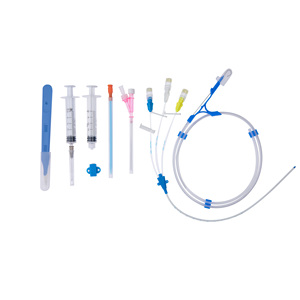
Engineered with medical-grade lipid-resistant polymers that eliminate chemical cracking during prolonged administration of parenteral nutrition (TPN) and intravenous lipid emulsions.
Internal fluid channels designed to minimize residual drug volume, ensuring precise dosage delivery of high-potency drugs in intensive care units (ICU) and neonatal ICU (NICU).
Precision-molded 6% male and female luer lock connectors ensure 100% leak-proof coupling with standard IV catheters, syringe pumps, and central venous lines.
The United Arab Emirates (UAE) healthcare ecosystem, overseen by the Ministry of Health and Prevention (MOHAP), the Dubai Health Authority (DHA), and the Department of Health – Abu Dhabi (DoH), represents one of the most sophisticated clinical environments in the Middle East. As tertiary care facilities, oncology centers, and specialized surgical hospitals expand across Dubai, Abu Dhabi, and Sharjah, the demand for medical-grade infusion accessories that eliminate cross-contamination, micro-leakage, and air embolism risks has reached an all-time high.
Among essential critical care disposables, the 3-Way Stopcock with Extension Line serves as a vital junction in complex infusion therapy. Functioning as a multi-port vascular access valve, it allows clinical staff to simultaneously administer multiple intravenous fluids, vasoactive medications, total parenteral nutrition (TPN), and blood products through a single venous entry point. However, selecting a reliable China OEM/ODM manufacturer capable of satisfying strict GCC regulatory standards requires deep evaluation of material science, fluid dynamics, manufacturing cleanroom metrics, and supply chain integrity.
Key Procurement Insight: GCC medical device tenders increasingly mandate lipid-resistant polycarbonate valve bodies capable of withstanding up to 4.5 bar (65 psi) hydrostatic pressure without structural crazing or torque degradation during continuous 72-hour clinical infusion cycles.
The structural integrity of a 3-Way Stopcock with Extension Line relies on the chemical interaction between its key polymer components. Standard infusion stopcocks constructed from basic grade polycarbonate (PC) are susceptible to Environmental Stress Cracking (ESC) when exposed to lipid emulsions, oncology agents, or alcohol-based disinfectants. This cracking phenomenon compromises the fluid path, leading to micro-leaks, loss of line pressure, and increased nosocomial infection risks.
Our manufacturing facility utilizes advanced, lipid-resistant co-polyester and medical-grade polycarbonate resin sourced from global audited suppliers. The tap handle features 360-degree smooth rotational displacement with distinct tactile click indicators at 90-degree positions ("ON", "OFF", and mixed infusion states). The internal core plug is precision-machined with a micro-smooth finish to maintain dynamic seal integrity under positive pressure while providing effortless manual rotation for nurses and anesthesiologists.
The integrated extension line eliminates direct manipulation of the patient's vascular catheter, reducing mechanical phlebitis and accidental line displacement. We manufacture extension tubing in multiple material formulations based on clinical requirements:
Below is a comparative technical analysis of our standard and high-pressure 3-way stopcock configurations supplied to UAE medical distributors:
| Technical Parameter | Standard ICU Stopcock Line | High-Pressure Oncology Line | Neonatal Micro-Bore Line |
|---|---|---|---|
| Hydrostatic Pressure Rating | Up to 1.5 Bar (21.7 psi) | Up to 4.5 Bar (65.2 psi) | Up to 2.0 Bar (29.0 psi) |
| Body Material | Lipid-Resistant Polycarbonate | Advanced Co-Polyester | Biocompatible PETG / PC |
| Residual Dead Volume | < 0.20 ml (Stopcock Body) | < 0.15 ml (Zero-Retention) | < 0.08 ml (Micro-Volume) |
| Extension Line Lengths | 10 cm, 25 cm, 50 cm, 100 cm | 15 cm, 30 cm, 100 cm, 150 cm | 10 cm, 15 cm, 30 cm |
| Tubing Inner Diameter (ID) | 3.0 mm (Standard Flow) | 3.0 mm (High Pressure) | 1.2 mm (Micro-Bore) |
| Sterilization Method | Ethylene Oxide (EO) / Gamma | Ethylene Oxide (EO) | Ethylene Oxide (EO) |
| Luer Lock Compliance | ISO 80369-7 Male/Female | ISO 80369-7 Threaded Lock | ISO 80369-7 Low-Volume |
The UAE market presents unique operational and climatic conditions that impact medical device storage, distribution, and clinical utilization. Understanding these localized variables allows us to tailor our manufacturing and packaging standards for regional tenders.
During transit and warehousing across Middle Eastern logistical hubs such as Jebel Ali Free Zone (JAFZA) and Dubai South, medical disposables can be subjected to ambient temperatures exceeding 45°C and fluctuating humidity prior to hospital delivery. Our products undergo accelerated thermal aging (equivalent to 5 years at ambient room temperature) and transport simulation testing per ASTM D4169 standards. Blister packs utilize high-grade medical Tyvek® sealed with controlled thermal parameters to ensure seal strength and sterile barrier integrity remain uncompromised.
Intensive care units across Abu Dhabi Health Services (SEHA) and private healthcare networks like Mediclinic, Aster DM, and NMC Healthcare mandate multi-lumen extensions with color-coded handles (Red for Arterial, Blue for Venous, Yellow for Epidural) to prevent medication administration errors. Our automated assembly lines support dual-color micro-injection molding and custom color handles that strictly comply with international patient safety goals (IPSG).
Leveraging over six decades of medical device manufacturing heritage (tracing back to our founding roots in 1955), our manufacturing campus combines European automation equipment with rigorous batch-wise testing protocol. Operating under ISO 13485:2016 quality management systems and WHO-GMP compliance, every manufacturing step is audited to ensure zero defect delivery.
Extrusion, injection molding, micro-assembly, and primary blister packaging take place in positive-pressure cleanrooms monitored continuously for airborne particulate counts and microbial load.
Every single 3-Way Stopcock assembly undergoes automated differential pressure air-decay leak testing to detect micro-porosity before blister sealing, guaranteeing 0% fluid leakage.
Ethylene Oxide cycles are fully validated per ISO 11135 standards with automated residual gas aeration, ensuring EO residuals fall well below ISO 10993-7 limits for systemic biocompatibility.
We provide full-spectrum OEM and private-label manufacturing partnerships tailored specifically for established medical equipment distributors and healthcare supply companies in the GCC region. Our export division manages everything from custom packaging design to complete regulatory technical file assembly.
Request factory-direct wholesale pricing, OEM technical dossiers, or sterile evaluation samples for the United Arab Emirates market today. Our dedicated GCC export team responds within 12 hours.
Inquire Now