


Explore our high-precision medical devices and supraglottic airway instruments designed for critical care, operating theaters, and emergency ventilation.
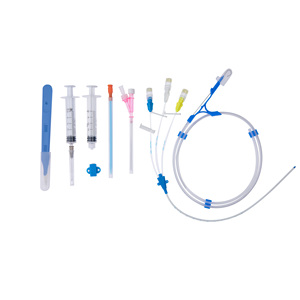
Precision-engineered polyurethane CVC set for critical intraoperative monitoring and fluid resuscitation during complex anesthesia procedures.
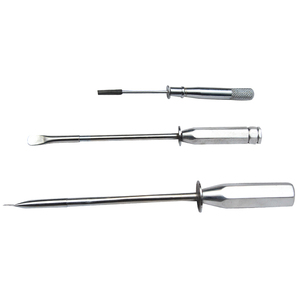
Autoclavable, medical-grade stainless steel trocar systems offering superior sharpness and ergonomic grip for surgical access.
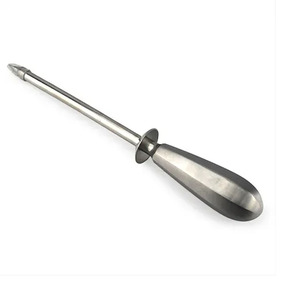
Tailored surgical instruments compliant with ISO 13485 standards, featuring customizable sleeve lengths and sealing caps.
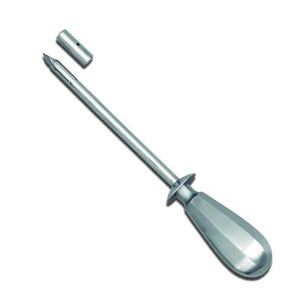
Advanced seal design minimizing gas leakage while facilitating seamless passage of surgical access tools and endoscopes.
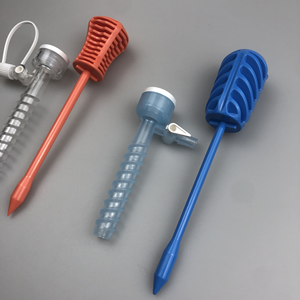
Kink-resistant medical PVC catheter with radio-opaque line for atraumatic chest drainage and emergency pleural decompression.
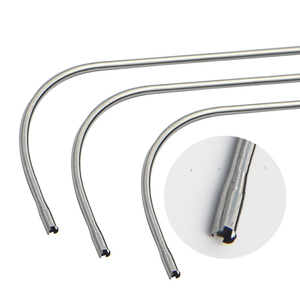
Anatomically contoured bent tubing designed for specialized otolaryngology procedures and targeted airway suctioning.
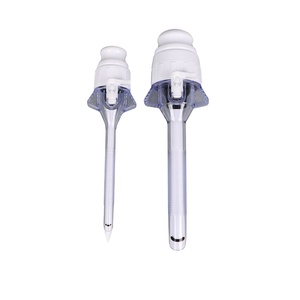
Optical bladeless tip design facilitating low-force insertion and reduced abdominal wall trauma in minimally invasive surgery.
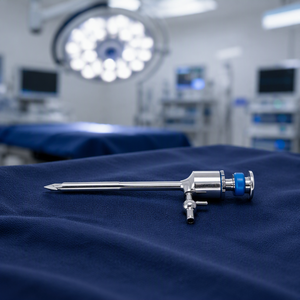
Automated retracting blade mechanism protecting clinicians against sharps injury during rapid access procedures.
Singapore's healthcare system—renowned worldwide for its rigorous clinical standards, efficiency, and advanced surgical outcomes—operates under a unique matrix of public healthcare clusters (such as SingHealth, National Healthcare Group [NHG], and National University Health System [NUHS]) and premier private hospital groups (IHH Healthcare, Raffles Medical Group). Within this sophisticated ecosystem, the demand for high-performance Supraglottic Airway Devices (SADs), specifically single-use and silicone Laryngeal Mask Airways (LMAs), has surged significantly over the past decade.
Historically, endotracheal intubation served as the primary modality for securing airways during elective day surgeries. However, modern anesthesia protocols in Singapore's Ambulatory Surgical Centres (ASCs) prioritize rapid turnaround time, minimal hemodynamic disturbance, reduced postoperative sore throat (POST), and smooth emergence without coughing or laryngospasm. Consequently, Laryngeal Masks have shifted from being secondary rescue devices in "difficult airway" algorithms to primary first-line choices in over 60% of short to mid-duration surgical procedures.
As healthcare expenditure management becomes pivotal even in high-income economies, Singaporean medical device distributors and hospital procurement panels are increasingly evaluating China’s top Laryngeal Mask manufacturers. China has established itself as the global powerhouse for medical-grade silicone molding and polymer extrusion, blending cost efficiencies with world-class regulatory compliance (ISO 13485, CE MDR, US FDA 510(k), and Singapore HSA approval).
When procurement committees in Singapore audit Chinese manufacturing facilities, material composition is a core criterion. Below is a structural matrix comparing standard Medical PVC LMAs against 100% Medical Silicone LMAs:
| Technical Parameter | Standard Medical PVC LMA | 100% Liquid Silicone Rubber (LSR) LMA | Clinical & Sourcing Impact |
|---|---|---|---|
| Cuff Compliance & Seal | Moderate elasticity; requires higher inflation pressure. | Ultra-soft anatomical compliance; seals hypopharynx at lower pressures (≤60 cm H₂O). | Silicone significantly reduces pharyngeal mucosal mucosal ischemia and sore throat risk. |
| Pharyngeal Seal Pressure | Typically 20–24 cm H₂O. | High-pressure seal up to 30–35 cm H₂O in 2nd gen designs. | Silicone allows safe positive pressure ventilation (PPV) without airway leak. |
| Kink Resistance of Airway Tube | Standard semi-rigid; risk of occlusion when patient flexes neck. | Wire-reinforced silicone stem options available. | Essential for shared-airway head and neck procedures in ENT or dental surgery. |
| Phthalate/DEHP Toxicity | May contain plasticizer additives (unless DEHP-free specified). | 100% Latex-Free, DEHP-Free, biologically inert. | Silicone meets strict pediatric safety guidelines in Singapore children's hospitals. |
| Unit Cost vs Performance | Cost-effective for high-volume basic surgical procedures. | Premium pricing; offers maximum trauma prevention. | Chinese OEMs deliver high-purity LSR silicone LMAs at competitive price points. |
The operational workflows of Singapore’s acute hospitals and specialty centers dictate strict design parameters for Laryngeal Mask Airways. Leading Chinese manufacturers custom-engineer LMAs to cater to these specific clinical scenarios:
Singapore’s Ministry of Health (MOH) actively encourages shifting suitable surgical cases to day-surgery settings to optimize hospital bed turnover. Procedures such as arthroscopic knee repair, inguinal hernia repair, laparoscopic cholecystectomy, and minor gynecological surgeries rely heavily on single-use dual-lumen Laryngeal Masks. Chinese suppliers providing integrated gastric suction ports allow anesthetists to verify correct mask positioning via gastric tube insertion, ensuring gastric emptying during short-stay general anesthesia.
Pediatric airway management demands absolute precision. Anatomical variances in infants and small children—such as a larger tongue, higher larynx (C3-C4), and floppy epiglottis—require pediatric-specific LMA cuffs (Sizes 1.0, 1.5, and 2.0). Premier OEM factories in China utilize high-precision injection molds to produce seamless, ultra-soft silicone cuffs that conform gently to the pediatric pharyngeal space without pressing against the delicate arytenoid cartilages.
In emergency departments (ED) and pre-hospital ambulance units managed by the Singapore Civil Defence Force (SCDF), rapid airway control is paramount. Fast-presetting intubating Laryngeal Masks (ILMA) act as reliable conduits for blind or fiberoptically guided endotracheal intubation when direct laryngoscopy fails. China's top medical manufacturers produce reinforced intubating LMAs featuring an ergonomically angled handle and epicuff elevation tab to direct the ET tube smoothly toward the glottic opening.
Molded to conform to the hypopharynx contour, establishing an airtight seal while preventing displacement during surgical position changes.
Separate respiratory lumen and esophageal channel facilitate passive regurgitation outflow and active gastric decompression.
Clear radio-opaque calibration lines and color-coded pilot balloons permit instant identification of size and depth placement under surgical lighting.
Why do leading Singaporean medical distributors, hospital tenders, and global brands partner with China’s top Laryngeal Mask manufacturers? The competitive advantage extends far beyond unit price; it lies in advanced cleanroom automation, materials science, and rigid quality assurance frameworks.
Top-tier manufacturing facilities in regions such as Jiangsu, Zhejiang, and Guangdong operate ISO Class 7 (Class 10,000) cleanrooms equipped with fully automated Liquid Silicone Rubber (LSR) injection molding machines. Automated production eliminates human touch during cuff forming, tube extrusion, and cuff-to-stem bonding. This drastically minimizes particulate contamination and bioburden prior to terminal packaging.
To supply Singapore’s highly regulated healthcare sector, premier Chinese manufacturers maintain extensive quality management systems certified to ISO 13485:2016. Key quality verification protocols include:
With an established legacy of manufacturing excellence dating back to 1955, specialized medical device producers leverage ultra-clean extrusion lines, biocompatible silicone formulation, and dedicated export documentation desks. By holding ISO 9001, ISO 13485, WHO-GMP, and CE Mark accreditations, these manufacturing capabilities seamlessly meet the stringent procurement and technical dossier standards set by Singapore's Health Sciences Authority (HSA).
For medical device importers, wholesale distributors, and sales agents in Singapore, bringing Chinese Laryngeal Masks to market requires navigating the regulatory pipeline managed by the Health Sciences Authority (HSA).
Laryngeal Mask Airways are categorized as Class B (Low-Moderate Risk) Medical Devices in Singapore. Importers must apply via the MEDICS (Medical Device Information and Communication System) online portal using one of the following evaluation routes:
Chinese OEM manufacturers support Singaporean importers by supplying the complete **CSDT (Common Submission Dossier Template)**. This technical file contains raw material biocompatibility studies (cytotoxicity ISO 10993-5, sensitization ISO 10993-10, irritation ISO 10993-10), shelf-life accelerated aging validation reports (3-year to 5-year stability), risk management files (ISO 14971), and multi-lingual Instructions for Use (IFU).
In addition to device registration, local Singapore importers must hold a valid GDPMDS certificate. This ensures that storage conditions (temperature-controlled warehousing avoiding direct sunlight and humidity extremes), batch recall management, and post-market surveillance systems adhere to Singapore’s Health Products Act.
Clear answers for hospital buyers, procurement officers, and medical distributors sourcing Laryngeal Masks for the Singapore market.
To successfully register Laryngeal Masks with Singapore's Health Sciences Authority (HSA) and win hospital tenders, manufacturers must provide ISO 13485:2016 QMS certification, CE Marking under EU MDR 2017/745 (or MDD transition), and comprehensive ISO 10993 biocompatibility testing reports. Having US FDA 510(k) clearance further accelerates the HSA registration process via the Immediate or Expedited evaluation routes.
Singaporean clinicians strongly favor Liquid Silicone Rubber (LSR) LMAs because silicone is naturally phthalate-free (DEHP-free), latex-free, and retains its soft flexibility at body temperature. Silicone cuffs adapt superiorly to the pharyngeal anatomy, establishing a tight airway seal at significantly lower mucosal inflation pressures (≤60 cm H₂O), thereby drastically reducing postoperative sore throat and tissue trauma.
Yes. Leading Chinese manufacturers offer complete OEM/ODM solutions, including custom pouch printing, local Singapore importer registration details on labels, GTIN/GS1 barcode integration for hospital inventory tracking systems, customized IFUs, and tailored inner carton packing configurations to meet distributor specifications.
Standard production lead times for OEM production run between 20 to 30 days following artwork approval. Direct sea freight shipping from major ports like Shanghai, Ningbo, or Shenzhen to the Port of Singapore (PSA) takes approximately 5 to 7 days, making China one of the most logistically agile and responsive supply hubs for Singapore’s medical sector.
Second-generation LMAs incorporate an isolated esophageal drainage channel alongside the main ventilation lumen. This critical addition allows clinicians to pass a gastric tube to decompress stomach contents, vent regurgitated fluids away from the glottis, and achieve higher pharyngeal seal pressures (>30 cm H₂O), making them safer for positive pressure ventilation during extended procedures.
Accelerate your medical device procurement in Singapore. Access certified ISO 13485 cleanroom production, full HSA regulatory dossier support, and factory-direct OEM pricing today.