


Engineered for high barrier protection, fluid management, and complete compliance with Algerian Ministry of Health standards.
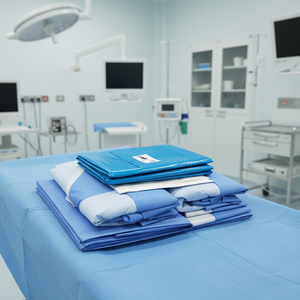
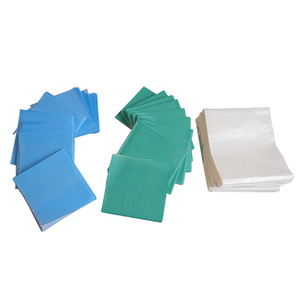
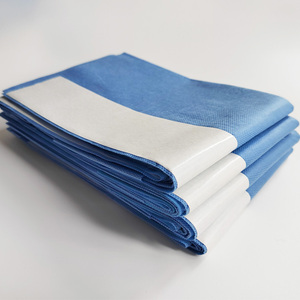
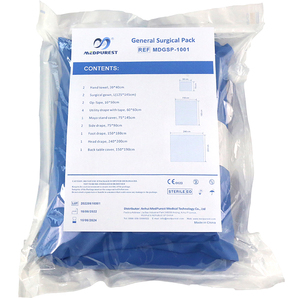
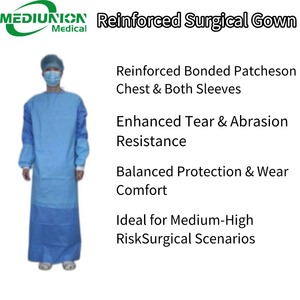
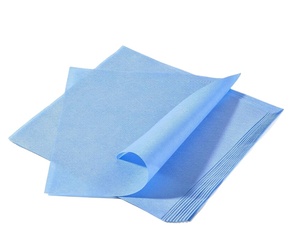
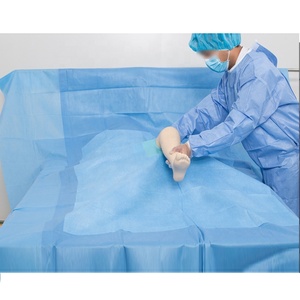
The healthcare infrastructure in Algeria is undergoing an unprecedented structural expansion. Driven by the Ministry of Health's (Ministère de la Santé, de la Population et de la Réforme Hospitalière) public modernization frameworks and substantial private sector investments across major medical hubs—including Algiers, Oran, Constantine, and Annaba—the demand for high-performance single-use medical consumables has surged. Central to this clinical transformation is the operational shift from traditional, reusable cotton drapes to advanced, single-use SMS (Spunbond-Meltblown-Spunbond) and SMMS custom surgical drapes.
As Surgical Site Infections (SSIs) remain a primary performance metric for hospital hygiene boards globally, Algerian healthcare facilities (including Centres Hospitalo-Universitaires - CHUs, Établissements Publics Hospitaliers - EPHs, and specialized private clinics) are mandating compliance with international microbial barrier standards such as EN 13795 and ANSI/AAMI PB70. Hospital procurement teams and medical device importers face a dual objective: securing reliable, sterile barrier fabrics that withstand heavy fluid loads during complex procedures, while negotiating competitive OEM/ODM unit costs to win tender allocations managed by central purchasing authorities like the Pharmacie Centrale des Hôpitaux (PCH).
Procuring single-use surgical drapes for Algeria requires deep alignment with regional regulatory mandates, specifically registration under the National Agency for Pharmaceutical Products (ANPP - Agence Nationale des Produits Pharmaceutiques). Direct OEM contract manufacturing provides Algerian distributors with customized packaging (trilingual labeling in French, Arabic, and English), localized kit assembly, and validated Ethylene Oxide (EO) sterilization certificates essential for smooth customs clearance at major maritime hubs like the Port of Algiers and Port of Oran.
This technical whitepaper provides an exhaustive procurement guide for healthcare administrators, surgical supply directors, and B2B medical importers seeking established OEM surgical drape manufacturers capable of high-volume, audited production engineered to Algerian clinical requirements.
The efficacy of a surgical drape relies on its underlying polymer matrix. Standard woven cotton drapes, even when heavily laundered, suffer from micro-fiber breakdown, variable pore sizes, and lint generation that carry airborne pathogens into the sterile field. In contrast, engineered non-woven surgical drapes utilize synthetic polyolefin fibers—primarily polypropylene—to create an impermeable barrier against blood-borne pathogens, irrigation fluids, and bacterial contamination.
Our OEM manufacturing process incorporates state-of-the-art continuous extrusion lines that bond distinct polymer layers together ultrasonically:
Exceeds AAMI Level 4 standards. Tested against viral penetration (ASTM F1671) and synthetic blood head pressure (ASTM F1670) for absolute surgical field isolation.
Polypropylene microfibers prevent particle shedding into the surgical site, dramatically lowering post-operative wound inflammation and foreign-body reactions.
Non-cytotoxic, non-irritating, and skin-sensitization tested in accordance with ISO 10993 standards, safeguarding patient skin during prolonged anesthesia.
Surgeries differ significantly in fluid exposure. A laparoscopic cholecystectomy produces minimal fluid runoff, whereas a Caesarean section or hip arthroplasty involves large volumes of blood, amniotic liquid, and saline wash. Our factory customizes drapes into defined protective zones:
Critical Area (Zone 1): The region directly adjacent to the incision site, subject to intense mechanical friction and high fluid contact. Here, drapes feature heavy-duty SMMS 50-60gsm fabric integrated with transparent incise films (iodophor-impregnated upon request) and deep fluid collection pouches with suction drainage ports.
Peripheral Area (Zone 2): Surrounding table coverage engineered from lightweight, drapeable SMS 35-40gsm fabric that maintains sterility across the entire instrument stand and mayo tray.
Below is a comparative breakdown of non-woven drape fabric specifications manufactured in our cleanrooms for OEM distribution in Algeria:
| Fabric Property | Standard SMS (35gsm) | Reinforced SMMS (45gsm) | High-Fluid PE Laminate | Test Standard |
|---|---|---|---|---|
| Hydrostatic Head Pressure | > 40 cm H2O | > 70 cm H2O | > 120 cm H2O (Impermeable) | AATCC 127 / ISO 811 |
| Tensile Strength (Dry MD/CD) | 75 N / 45 N | 110 N / 75 N | 160 N / 120 N | EN ISO 13934-1 |
| Lint Particle Count | Log10 Index < 2.0 | Log10 Index < 1.5 | Near Zero Linting | ISO 9073-10 |
| AAMI PB70 Classification | Level 2 / Level 3 | Level 3 / Level 4 | Level 4 Complete Barrier | ANSI / AAMI PB70 |
| Common Algerian Clinical Application | Minor outpatient, ENT, Dental draping | General Surgery, Gynaecology, ICU | Orthopedics, Cardiovascular, Trauma | Public CHU / Private Clinic ORs |
Medical procurement in Algeria requires precise tailoring of drape packs to match specialized surgical departments. Our contract manufacturing services supply modular packs optimized for specific clinical workflows:
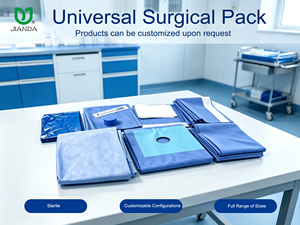
Universal drape packs equipped with integrated cable holders, adhesive instrument pockets, and fenestrated sheets with conformable aperture rings. Engineered to fit standard operating tables used across Algerian public hospital operating theaters.
Customized Caesarean Section drape packs featuring full fluid collection pouches with continuous drainage spouts, integrated incise film, and supplementary baby warming wraps designed for high-volume maternity wards.
Heavy-duty, tear-resistant limb drapes featuring elasticated fenestrations that maintain a tight, sterile seal around arms or legs during manipulation. Comes with non-slip MAYO stand covers and leg boots.
By consolidating all specialized components—drapes, sterile surgical gowns, equipment covers, hand towels, and indicator tapes—into a single pre-sterilized pack, Algerian hospitals cut perioperative prep time by up to 35% while eliminating individual component stocking errors in central sterile supply departments (CSSD).
For Algerian importers and brand owners, establishing a direct manufacturing partnership with an established global supplier ensures complete control over product specification, compliance documentation, and commercial margins.
Our OEM capabilities cover every dimension of surgical drape design:
Backed by over six decades of medical device manufacturing experience (Sterimed Group heritage established in 1955), our manufacturing facilities operate under comprehensive quality management frameworks certified to ISO 9001, ISO 13485, and WHO-GMP standards.
All surgical drapes and operation packs are converted, folded, and pouch-sealed within controlled ISO Class 8 (Class 100,000) cleanrooms equipped with HEPA filtration, positive air pressure differential monitoring, and strict environmental particle counters. Automated ultrasonic welding and folding equipment eliminates human contact during critical assembly stages, guaranteeing low initial bioburden levels prior to terminal sterilization.
Terminal sterilization is conducted via industrial Ethylene Oxide (EO) gas chambers operated in strict accordance with ISO 11135. Every production batch undergoes rigorous 14-day quarantine, biological indicator testing (Bacillus atrophaeus), and gas residue analysis (EO and ECH limits per ISO 10993-7) prior to release.
Each individual pouch and master shipper carton carries clear barcode identification, batch lot tracking, production date, and expiration date, providing 100% downstream traceability from factory dispatch to the hospital operating room in Algeria.
Essential guidance addressing regulatory compliance, commercial terms, and logistics for medical procurement in Algeria.
Leverage our 65+ years of manufacturing expertise, competitive OEM factory pricing, and rigorous quality assurance to scale your medical supply business across Algeria and North Africa.