


Precision-engineered respiratory care consumables manufactured under cleanroom conditions, featuring anti-kink star lumen tubing, ergonomic nasal prongs, and DEHP-free biocompatible polymers for public and private healthcare systems.
As a global pioneer in medical device manufacturing with legacy roots dating back to 1955, Sterimed Group has established itself as an authoritative exporter of respiratory care disposables, urology instruments, and surgical systems. Supplying more than 90 countries worldwide, our engineering paradigms are aligned with the stringent quality frameworks mandated by international regulatory bodies, including ISO 9001, ISO 13485, WHO-GMP, and European CE marking.
In evaluating the South American medical device market—specifically Peru—importers, regional health authorities (MINSA), and private healthcare networks face unique clinical challenges. Peru’s geographic topology spans dense coastal urban centers like Lima and Callao, humid Amazonian sectors such as Iquitos, and extreme high-altitude Andean environments including Cusco (3,400 meters above sea level), Puno (3,800 meters), Arequipa (2,325 meters), and Huancayo. High-altitude environments present critical physiological hurdles: reduced barometric pressure directly impairs atmospheric oxygen partial pressure (PO2), triggering widespread baseline hypoxemia, acute mountain sickness (AMS), high-altitude pulmonary edema (HAPE), and chronic respiratory pathologies among resident and visitor populations.
Clinical Insight for Peruvian Procurement Directors: At an altitude of 3,500 meters, ambient oxygen partial pressure drops by nearly 35% compared to sea level. Standard low-flow nasal cannulas under-deliver effective FiO2 if tubing lumen collapses under patient movement or if prongs cause localized tissue necrosis during prolonged high-flow supplemental oxygen delivery. Sterimed’s star-lumen anti-kink oxygen tubing ensures uninterrupted flow dynamics across extreme elevation gradients.
For medical device importers, hospital buyers, and pharmaceutical distributors in Peru, sourcing oxygen cannulas is not merely a matter of unit price. It requires a comprehensive compliance framework under DIGEMID (Dirección General de Medicamentos, Insumos y Drogas), robust mechanical reliability, thermal stability, non-toxic DEHP-free polymer selection, and zero-defect sterility validation. This whitepaper details the engineering, regulatory, and application dynamics of oxygen cannulas imported into Peru and Latin America.
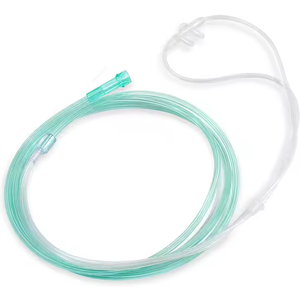
The operational efficiency of a disposable oxygen nasal cannula depends on polymer rheology, surface hydro-finishing, and structural geometry. Sterimed manufactures oxygen delivery systems using two core material pathways: Medical-Grade Plasticized Polyvinyl Chloride (PVC) and Platinum-Cured Biocompatible Liquid Silicone Rubber (LSR).
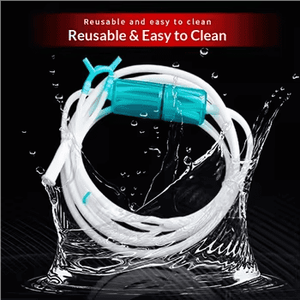
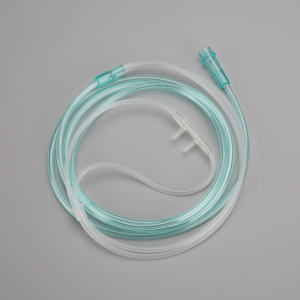
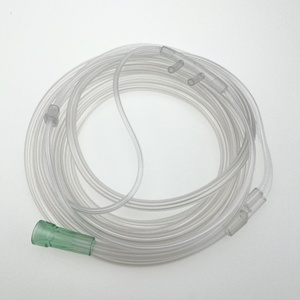
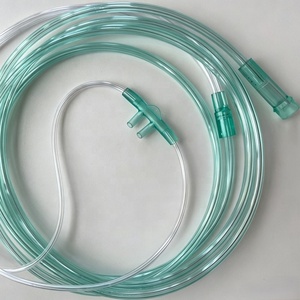
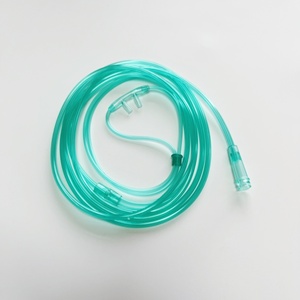
Conventional smooth-bore tubing carries a high risk of accidental occlusion when folded, twisted, or weighed down by hospital bed rails. In high-altitude emergency care units across the Peruvian Sierra, continuous oxygen supply is vital. Sterimed incorporates an internal five-star lumen profile within every PVC oxygen tube. If the external wall is completely flattened or kinked 180 degrees, the internal star-shaped channels maintain open airways, preserving continuous volumetric gas flow without flow-rate decay.
Patient contact with nasal prongs often extends over several days or weeks, particularly during severe pneumonia treatment, COPD exacerbations, or postoperative recovery. Standard industrial PVC plasticized with di(2-ethylhexyl)phthalate (DEHP) poses potential cytotoxic and endocrine risks. Sterimed’s nasal cannulas utilize non-phthalate (DEHP-free) medical plasticizers compliant with ISO 10993-5 (Cytotoxicity), ISO 10993-10 (Skin Irritation and Sensitization), and ISO 10993-11 (Systemic Toxicity). Prongs are hydro-polished to remove micro-burrs, eliminating nasal mucosal abrasion, septal pressure ulcers, and patient discomfort.
When high-flow oxygen (HFNC) is delivered—or when ambient temperatures drop drastically during Andean nights—temperature differentials between heated gas and ambient air cause moisture condensation (rainout) within the tube. If aspirated by the patient, this liquid triggers coughing fits and airway irritation. Our premium high-flow silicone cannulas integrate an in-line water collector trap. This chamber captures condensed fluid without interrupting the closed circuit or dropping delivered pressure, a crucial feature for neonatal and pediatric intensive care units (NICU/PICU) in Peruvian public regional hospitals.
Internal multi-channel design guarantees continuous oxygen delivery even under severe tube bending, accidental twisting, or patient compression.
Terminally sterilized under ISO 11135 validated EO cycles with residual limits below 4 mg/device, offering a 5-year sterile shelf life.
Complete regulatory dossiers, Certificate of Free Sale (CFS/CLV), ISO 13485 QMS, and technical data sheets prepared for rapid Peruvian registration.
Peru’s healthcare infrastructure operates through a dual system: the public sector—comprising the Ministerio de Salud (MINSA) network and EsSalud (Seguro Social de Salud)—and a rapidly expanding private sector led by major clinical networks such as Clínica Internacional, SANNA, and Clínica Ricardo Palma. Sourcing requirements differ significantly across these operational landscapes.
In high-altitude regions (Cusco, Puno, Huancavelica, Pasco), emergency transport vehicles and rural health posts (Puestos de Salud) rely heavily on portable oxygen cylinders and concentrators. Fluctuations in supply pressure require low-resistance cannulas that maximize FiO2 delivery per liter of oxygen consumed. Sterimed’s dual-prong curved designs seal comfortably within the nares, preventing gas leakage and optimizing FiO2 even at low oxygen cylinder flow settings.
Post-pandemic respiratory management guidelines across Latin America emphasize non-invasive ventilation (NIV) and High Flow Nasal Cannula (HFNC) therapy prior to endotracheal intubation. HFNC delivers heated, humidified gas at flow rates up to 60 L/min. Sterimed’s specialized HFNC pediatric and adult silicone cannulas maintain structural integrity under high pressure, preventing prong dislodgement while delivering precise oxygen fractions.
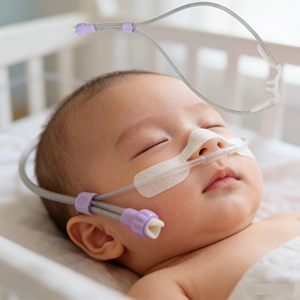
Neonatal units in public hospitals require extremely soft, micro-sized prongs designed to fit premature infants without causing facial trauma. Our infant oxygen nasal cannulas feature adjustable slide bolas and ultra-flexible tubing that reduce skin contact friction, making them ideal for long-term monitoring in incubators.
Importers and procurement officers can select the precise cannula configuration matching their clinical application from the specification matrix below:
| Feature Parameter | Standard Low-Flow PVC Cannula | High-Flow Silicone Cannula w/ Water Trap | Pediatric / Infant HFNC Cannula |
|---|---|---|---|
| Primary Material | Medical Grade DEHP-Free PVC | 100% Platinum-Cured Liquid Silicone | Soft Micro-Silicone / Elastomer |
| Tubing Structure | 5-Star Anti-Kink Internal Lumen | Reinforced Smooth Bore + Trap | Ultra-Flex Low-Weight Tubing |
| Prong Geometry | Straight / Curved Soft Prongs | Ergonomic Anatomical Flare | Micro-Atraumatic Neonatal Tips |
| Recommended Flow Rate | 1 to 6 Liters / Minute (LPM) | Up to 15 - 60 LPM | 0.5 to 15 LPM (Pediatric) |
| Sterilization Method | Ethylene Oxide (EO) Gas | Ethylene Oxide (EO) / Autoclavable | Ethylene Oxide (EO) Gas |
| Clinical Setting | General Wards, ER, Home Care | ICU, High Altitude, Respiratory Care | NICU, PICU, Pediatric Wards |
| Regulatory Standards | ISO 13485, CE, WHO-GMP | ISO 13485, CE, WHO-GMP | ISO 13485, CE, WHO-GMP |
Navigating the import pathway for medical devices into Peru requires strict adherence to national health authorities. The regulatory authority DIGEMID classifies medical devices into four risk classes under Decreto Supremo N° 016-2011-SA. Nasal oxygen cannulas fall into Class II (Low-Moderate Risk / Riesgo Moderado).
1. Registro Sanitario (Sanitary Registration): To obtain a Registro Sanitario for Sterimed products, local Peruvian distributors require a comprehensive Technical Dossier. Sterimed provides complete documentation, including ISO 13485 certificates, Declarations of Conformity, biocompatibility test results, batch sterilization validation reports, and raw material safety data sheets (MSDS).
2. Certificate of Free Sale (CFS / Certificate de Libre Venta): Public procurement bodies, such as SeACE (Sistema Electrónico de Contrataciones del Estado), demand a notarized and apostilled CFS verifying that the devices are legally marketed in the country of origin and exported globally.
3. Spanish Labeling & IFU Requirements: Primary pouches and secondary shipping cartons must display clear Spanish translations, detailing lot number, manufacturing date, expiration date, sterilization indicator, single-use graphic symbols (ISO 15223-1), and storage conditions suitable for humid coastal or high-altitude dry storage.
The Latin American medical disposables market is expanding rapidly, driven by increased public healthcare expenditure, expansion of universal health coverage (Aseguramiento Universal en Salud - AUS), and modernizations across regional health networks. Key trends include:
With over six decades of dedicated manufacturing experience since 1955, Sterimed Group operates state-of-the-art cleanroom manufacturing plants designed to meet strict international standards. Our corporate strengths include:
From custom polymer compounding, precision tube extrusion, and injection molding to automated assembly and EO sterilization, every step is controlled in-house to guarantee batch consistency.
We provide tailored pouch artwork, custom tube lengths (2m, 2.1m, 3m, 5m), customized connector colors, and localized Spanish IFUs to empower your brand in regional tenders.
Experienced export documentation desk facilitating smooth freight logistics via ocean shipping to Callao Port or air freight to Jorge Chávez International Airport (LIM), accompanied by all required customs and health certificates.
Below are detailed answers to common inquiries from medical device importers, hospital procurement officers, and regulatory specialists in Peru and South America:
Sterimed manufacturing facilities operate under strict ISO 9001 and ISO 13485 quality management systems, hold WHO-GMP certification, and maintain European CE marks. We supply Peruvian importers with full technical dossiers (Dossier Técnico), Certificate of Free Sale (CFS/CLV), biocompatibility reports (ISO 10993), and EO sterilization validation records required by DIGEMID for Class II sanitary registration.
Our oxygen cannulas feature a 5-star internal lumen profile designed to prevent lumen collapse under low barometric pressure or physical kinking. This ensures uninterrupted oxygen flow and stable FiO2 delivery, critical for treating altitude-induced hypoxemia, acute mountain sickness, and chronic respiratory conditions in Andean medical centers.
Yes. We offer complete OEM and private-label manufacturing services. We can print your brand logo on individual sterile pouches and outer cartons, include Spanish language Instructions for Use (IFUs), adapt barcodes for Peruvian hospital inventory systems, and customize tube lengths (such as 2.1m or 3m) according to public tender specifications.
All single-use disposable oxygen cannulas undergo terminal Ethylene Oxide (EO) sterilization in validated industrial chambers according to ISO 11135 standards. Each peel-open pouch features a chemical sterilization indicator, lot number, and manufacture/expiration dates, supporting a validated 5-year sterile shelf life.
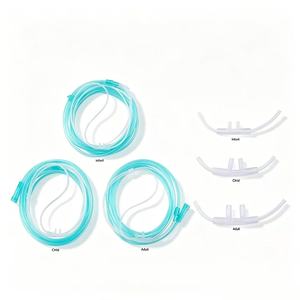
We manufacture a complete line of sizes: Neonatal, Infant, Pediatric, and Adult. Prong options include standard straight, curved soft prongs, flared prongs, and high-flow silicone configurations with integrated condensation water traps for intensive care applications.
Production lead time typically ranges between 20 to 30 days depending on order size and custom branding requirements. Ocean freight is dispatched directly to Callao Port (Lima), while urgent medical samples or high-value orders can be shipped via air freight to Jorge Chávez International Airport (LIM).