


Direct Factory Export Range Certified for Ministry of Health Tenders, Private Hospitals, and Specialized Clinics across Baghdad, Erbil, and Basra
The Republic of Iraq is currently undergoing a structural transformation in its public and private healthcare sectors. Driven by Ministry of Health (MOH) initiatives, major hospital expansion projects in Baghdad, Erbil, Basra, and Najaf, and the restructuring of national tenders under Kimadia (State Company for Marketing Drugs and Medical Supplies), the demand for high-grade surgical masks and single-use surgical disposables has reached an unprecedented volume. However, procurement directors and medical equipment importers face severe challenges regarding regulatory compliance, extreme climatic degradation during transit, and inconsistent barrier filtration performance.
As established surgical mask factories and international export partners operating under ISO 13485 and WHO-GMP frameworks, our role extends beyond manufacturing to serving as technical advisory partners. This white paper addresses the core search intent of Iraqi hospital administrators, procurement agents, and tender directors seeking reliable, high-gain information on technical mask specifications, laparoscopic trocar cannulas, vascular access catheters, and localized supply chain resilience.
Key Procurement Takeaway: Modern Iraqi healthcare contracts require strict adherence to EN 14683 Type IIR fluid resistance standards and ISO 10993 biocompatibility to ensure equipment survivability under Iraq's dust-heavy airborne microclimates and high-temperature supply chain corridors.
Understanding search intent in the Middle Eastern B2B healthcare market requires distinguishing between general PPE procurement and high-purity clinical barrier supplies. Iraqi buyers specifically prioritize terminally sterilized products, long shelf-life packaging, clear English/Arabic labeling, and customs-ready Certificate of Conformity (CoC) clearance issued by authorized inspection bodies (such as Bureau Veritas or SGS for Iraqi customs clearance at Umm Qasr port or Erbil International Airport).
A primary failure point of low-cost surgical masks in arid, dust-prone Middle Eastern environments is rapid filter clogging and structural ear-loop detachment. Our manufacturing facilities utilize high-speed, ultrasonic welding technology to produce 3-ply and 4-ply surgical masks engineered specifically for demanding clinical environments.
Combines a hydrophobic spunbond outer layer, micro-porous melt-blown electrostatic filtration core (≥98% BFE & PFE), and hypoallergenic inner lining for prolonged surgical wear.
Engineered to withstand synthetic blood splashes at pressures up to 160 mmHg, protecting operating room staff during high-acuity surgical procedures.
Single-use devices, central venous catheters, and laparoscopic trocars are terminally sterilised by EO according to ISO 11135 standards with documented residual testing.
| Device Category | Key Technical Standards | Primary Material / Formulation | Iraqi Market Application |
|---|---|---|---|
| 3-Ply Medical Masks | EN 14683 Type II / IIR, ASTM F2100 Level 3 | Virgin Spunbond + Melt-blown Polypropylene | General Hospital Wards, Outpatient Clinics, Airborne Dust Defense |
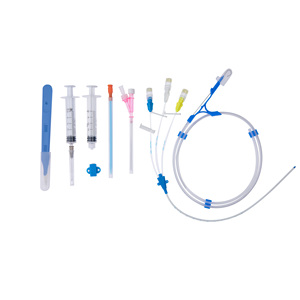
| Central Venous Catheters | ISO 10555, CE Certified, Radio-opaque | Medical Grade Thermoplastic Polyurethane | ICU Critical Care, Trauma Units, Post-Operative Vascular Access |
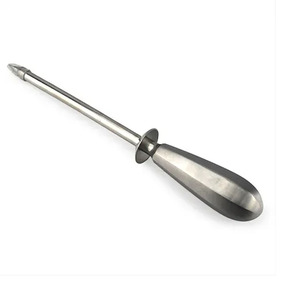
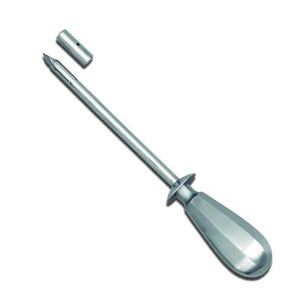
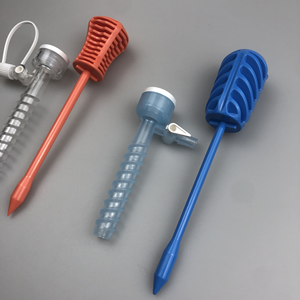
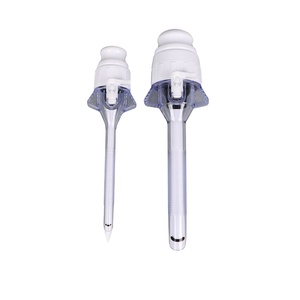
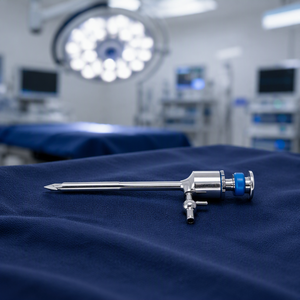
| Laparoscopic Trocars | ISO 13485, Bladeless / Shielded Blade | German Stainless Steel & Medical ABS | Minimally Invasive Abdominal Surgery, Gynecology, Endoscopy |
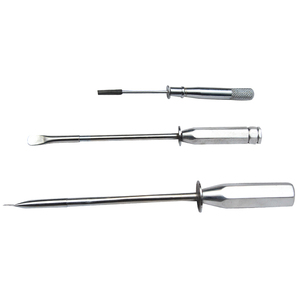
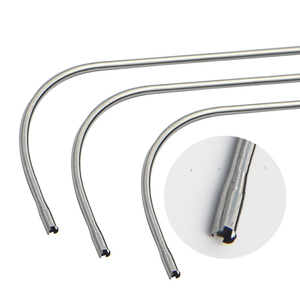
| Veterinary Cannulas | Reusable German Grade Stainless Steel | AISI 316L Surgical Stainless Steel | Agricultural Livestock Health, Rural Veterinary Centers (Anbar/Nineveh) |
Medical supplies exported to Iraq must adapt to distinct regional operational environments. A failure to account for localized clinical scenarios often leads to inventory degradation, compromised sterile barriers, or high infection risks.
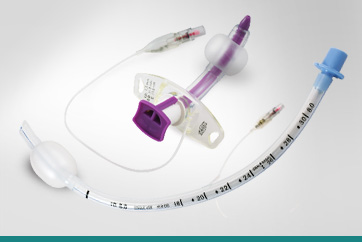
In high-density medical facilities such as Medical City Baghdad, high patient turnover demands sterile medical disposables with 100% lot traceability. Central Venous Catheter lumen sets and siliconised endotracheal tubes require soft-tip designs to reduce mucosal trauma during long-term ventilation under intensive care protocols.
Southern governorates experience extreme summer heat reaching over 50°C alongside frequent sandstorms (Shamal winds). Surgical masks exported to Basra require heat-stable melt-blown layers that do not degrade or lose electrostatic charge, alongside heavy-duty sterile pouch seals for surgical instruments.
The rapid expansion of private specialty hospitals in Erbil drives demand for premium, single-use bladeless trocars (5mm/10mm/12mm) and thoracic catheters. Precision gas-sealing valves prevent pneumoperitoneum leaks during prolonged laparoscopic procedures.
In agrarian zones across Al-Anbar, Nineveh, and Diyala, veterinary clinics require heavy-duty reusable stainless steel trocar cannulas. German stainless steel construction ensures resistance against corrosion, supporting repeated sterilization cycles under field conditions.
Exporting surgical masks and medical devices into Iraq requires complete transparency regarding regulatory compliance and logistics chains. Importers must navigate dual pathways: public tenders issued by Kimadia and private sector procurement managed by licensed regional distributors.
Our export desk coordinates multi-modal logistics tailored to Iraqi customs requirements:
Founded with a commitment to clinical precision, our manufacturing group represents over 65 years of medical device engineering heritage. Operating state-of-the-art Class 100,000 cleanroom environments, automated mask production lines, and an in-house EO sterilization suite, we ensure every unit supplied to Iraqi hospitals meets international safety benchmarks.
Our surgical masks are manufactured in compliance with EN 14683 Type II and Type IIR standards, offering Bacterial Filtration Efficiency (BFE) ≥ 98% and Particle Filtration Efficiency (PFE) ≥ 98%. Fluid-resistant Type IIR variants provide synthetic blood splash protection up to 160 mmHg, fully meeting Kimadia and Iraqi Ministry of Health tender specifications.
All single-use sterile devices (including central venous catheters, trocars, and ET tubes) are sealed in medical-grade Tyvek or heavy-duty medical paper pouches with reinforced heat seals. Master cartons are constructed from moisture-resistant corrugated fiberboard and can be fitted with container thermal liners upon request for sea freight routed via Umm Qasr.
Yes. We offer complete OEM and private-label manufacturing options. Our graphics team provides bilingual Arabic and English artwork layout, customized barcodes, brand logo integration, and specific packaging inner boxes to assist local distributors in establishing strong brand presence across Iraqi governorates.
Standard production lead time ranges between 15 to 25 days depending on contract volume. Air freight transit to Baghdad (BGW) or Erbil (EBL) takes approximately 3 to 7 days, while sea freight to Umm Qasr Port typically takes 18 to 28 days depending on shipping line schedules.
We provide a comprehensive documentation dossier including the Certificate of Origin, Commercial Invoice, Packing List, ISO 13485 QMS Certificate, CE Certificate, Free Sale Certificate (FSC), and Batch Sterilization Reports necessary for pre-shipment inspection (PSI) and COSQC customs clearance.
Request technical specifications, product samples, OEM private label terms, or direct FOB/CIF price quotations for your upcoming procurement orders in Iraq.
Get Catalog