


1. Strategic Procurement Overview: Pressure Monitoring Lines for the Australian Healthcare Sector
In modern critical care environments across Australia—ranging from intensive care units (ICUs) and neonatal intensive care units (NICUs) in Sydney and Melbourne to specialized cardiac catheterization laboratories in Brisbane and Perth—accurate hemodynamic measurement is a non-negotiable clinical prerequisite. Invasive blood pressure (IBP) monitoring systems rely entirely on the mechanical fidelity of pressure monitoring lines to transmit high-frequency vascular arterial waveforms accurately to electronic transducers without signal damping, compliance losses, or micro-bubbling artifact interference.
As Australian hospital procurement networks (including state-level health authorities such as NSW Health, Victoria Department of Health, and Queensland Health) increasingly emphasize supply chain resilience, total cost of ownership, and rigid regulatory compliance under the Therapeutic Goods Administration (TGA), major hospital groups are diversifying their supplier portfolios. Sourcing high-pressure extension lines, central venous catheter (CVC) access assemblies, and laparoscopic trocar instruments directly from audited, top-tier Chinese manufacturers has transitioned from a cost-saving alternative to an indispensable strategic sourcing pillar.
This technical whitepaper examines the engineering parameters, clinical mechanics, TGA regulatory alignment, and supply chain logistics required for Australian medical device distributors and hospital procurement teams importing medical-grade pressure monitoring lines and associated vascular/surgical disposables from China.
2. Engineering & Material Science Architecture of High-Pressure Lines
The manufacturing of intravascular pressure monitoring tubing requires advanced polymer extrusion techniques. A failure in line integrity can result in blood loss, air embolism, or miscalculated vasoactive drug dosages. Below are the key material and structural benchmarks enforced in our manufacturing processes:
Zero-Compliance PVC / PE Extrusion
Utilizes rigid, non-compliant co-extruded Polyethylene (PE) inner linings or rigid medical-grade Polyvinyl Chloride (PVC) outer layers to eliminate volumetric expansion under rapid systolic pressure surges.
DEHP-Free & Non-Pyrogenic Biocompatibility
Formulated 100% free of Di(2-ethylhexyl)phthalate (DEHP) and plasticizer leachables, complying with ISO 10993 cytotoxicity, hemocompatibility, and systemic toxicity requirements for continuous blood contact up to 30 days.
High-PSI Polycarbonate Luer Locks
Precision injection-molded male and female Luer lock connectors capable of withstanding up to 500-1200 PSI pressure bursts. Features dual rotating lock collars to prevent line twisting during patient transport.
Technical Performance Comparison: Standard Extension Sets vs. High-Pressure Monitoring Lines
To assist biomedical engineering departments and procurement officers in validating product selection, the following data matrix highlights the operational differences between standard gravity IV lines and specialized pressure monitoring lines:
| Technical Specification | Standard IV Extension Tubing | High-Pressure Monitoring Line (Our China Cleanroom Specification) |
|---|---|---|
| Internal Diameter (ID) | 3.0 mm – 4.0 mm (Large Volume) | 1.0 mm – 1.5 mm (Narrow Bore for Optimal Waveform Transmission) |
| Internal Volumetric Displacement | High (Flexes under pressure spikes) | Near-Zero Volumetric Expansion (< 0.01 mL/ft at 300 mmHg) |
| Burst Pressure Resistance | 30 – 50 PSI Max | 500 PSI – 1200 PSI (Depending on rigid PVC or PE co-extrusion) |
| Color Coding Options | Clear Only | Red (Arterial), Blue (Venous), Yellow (Pulmonary Artery / CVP) color stripes |
| Connector Material | Standard ABS or Polypropylene | High-Impact Medical Polycarbonate with lipid-resistant properties |
| Sterilization Validation | EO / Gamma | Validated Ethylene Oxide (EO) to ISO 11135 (SAL 10⁻⁶ level) |
3. Clinical Applications in Australian Hospital Workflows
Australian acute care units utilize invasive hemodynamic monitoring lines across multiple distinct clinical pathways:
A. Arterial Line System (Arterial Blood Pressure - ABP)
Introduced via the radial or femoral artery, arterial lines provide continuous real-time beat-to-beat systolic, diastolic, and mean arterial pressure tracking. Our high-pressure lines connect directly between the arterial catheter and the pressure transducer flush system. The red-striped line coding allows immediate visual identification in high-stress trauma bays, reducing medication error risks.
B. Central Venous Pressure (CVP) & Pulmonary Artery Catheterization
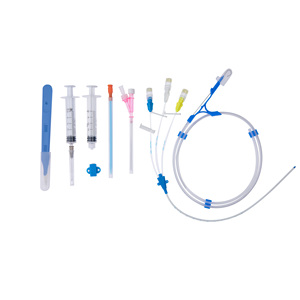
In cardiothoracic surgeries and ICU septic shock management, blue and yellow color-coded monitoring lines link multi-lumen Central Venous Catheters (CVC) or Swan-Ganz catheters to monitoring consoles. The low-priming volume (typically 0.2 mL to 0.9 mL depending on length) prevents fluid overload in pediatric and neonatal ICU patients.
C. High-Pressure Contrast Injection in Catheterization Labs
During coronary angiography or peripheral vascular intervention, specialized high-pressure lines rated up to 1200 PSI connect power injectors to contrast delivery catheters. The structural integrity of the polycarbonate Luer connectors eliminates the catastrophic risk of line rupture under rapid contrast fluid burst rates.
4. Navigating Australia TGA Regulatory Standards & Quality Assurance
Importing medical disposables into Australia requires strict adherence to the Therapeutic Goods Act 1989 and oversight by the Therapeutic Goods Administration (TGA). Medical devices such as Pressure Monitoring Lines, Trocar Cannulas, and Central Venous Catheters are categorized primarily as Class IIa or Class IIb medical devices under TGA classification rules.
Essential Documentation Package Provided for TGA Sponsors:
- ISO 13485:2016 Certification: Issued by internationally recognized Notified Bodies (such as TÜV SÜD, BSI, or SGS) covering the design, cleanroom extrusion, packaging, and sterilization of sterile vascular catheters and extension lines.
- CE Mark Certification (MDR 2017/745): EU Declaration of Conformity and CE 2797 certificates, ensuring harmonized safety benchmarks recognized by TGA under international assessment pathways.
- ISO 10993 Biocompatibility Test Reports: Comprehensive testing data from accredited third-party laboratories covering Systemic Toxicity, Intracutaneous Reactivity, Sensitization, Hemolysis, and In-Vitro Cytotoxicity.
- EO Sterilization Validation (ISO 11135): Full sterilizer chamber physical performance validation, biological indicator (Bacillus atrophaeus) challenge audits, and Gas Residual analysis (Ethylene Oxide and Ethylene Chlorohydrin levels under ISO 10993-7 guidelines).
- Real-Time & Accelerated Shelf-Life Aging Data: 3-year and 5-year sterile barrier integrity reports (ASTM F1929 dye penetration, bubble emission ASTM F2096, and seal strength ASTM F88).
5. APAC Supply Chain Dynamics: China-to-Australia Manufacturing Advantages
The commercial relationship between Chinese medical device manufacturers and Australian healthcare distributors benefits from optimized logistics routes, regional trade integration (RCEP), and vast economies of scale.
A. Cost Optimization without Quality Compromise
Automated cleanroom extrusion lines in our Chinese facilities run 24/7 high-speed production of pressure lines and trocar assemblies. This high-volume efficiency drastically lowers per-unit manufacturing costs compared to European or North American production facilities, enabling Australian distributors to secure competitive tenders with public and private hospital chains.
B. Freight Efficiency & Regional Proximity
Shipping from major Chinese ports (such as Shanghai, Ningbo, or Shenzhen) to primary Australian seaports (Sydney, Melbourne, Brisbane, Fremantle) takes approximately 12 to 18 days via direct ocean freight routes. For urgent hospital inventory shortages, direct air cargo routes via Sydney Airport (SYD) or Melbourne Airport (MEL) allow 3 to 5 day door-to-door delivery.
C. Custom OEM/ODM Capabilities
We support full OEM private label packaging tailored for Australian distributors:
- Custom line lengths ranging from 15 cm (6 inches) to 300 cm (120 inches).
- Integrated components: Stopcocks (2-way / 3-way), needleless access valves, lipid-resistant check valves, transducer isolation domes, and blood sampling ports.
- Custom branding: Private-label pouch printing with Australian Sponsor details, GTIN-13 / GS1 DataMatrix barcodes, and multilingual IFU (Instructions for Use).
6. Comprehensive Buyer's FAQ for Australian Procurement Managers
7. Partnering with China's Premier Medical Disposables Exporter
Choosing the right manufacturing partner in China is critical to maintaining uncompromised patient safety and dependable supply chain logistics. Our state-of-the-art manufacturing facilities feature Class 100,000 (ISO Class 8) controlled cleanrooms, automated extrusion lines, computer-controlled Luer lock assembly jigs, and 100% optical camera inspection systems for zero-defect output.
Whether you are expanding an existing medical device portfolio in Australia or bidding for regional hospital district tenders, our experienced engineering and export desk is ready to support your technical and commercial requirements.