


Direct factory-engineered urology disposables, critical care catheter sets, and stainless steel surgical cannulae tested under extreme desert ambient conditions and fully compliant with Saudi Food and Drug Authority (SFDA) Medical Device Marketing Authorization (MDMA).
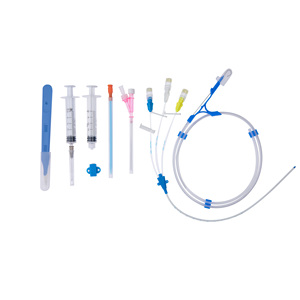
Precision multi-lumen intravascular access catheter set designed for critical care fluid monitoring and intensive therapy units across Ministry of Health hospitals in Riyadh.
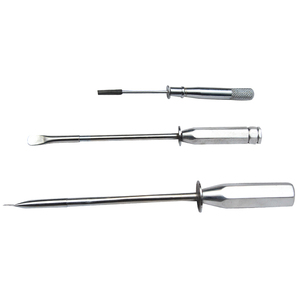
High-grade surgical stainless steel trocar cannulae featuring anti-corrosive German alloys for specialized veterinary abdominal decompression and fluid drainage.
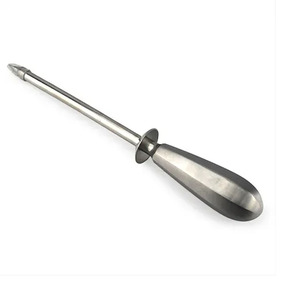
Heavy-duty surgical cannulation system featuring custom laser engraving, dual-bevel sharp puncture points, and high-flow lumen clearance for rapid decompression.
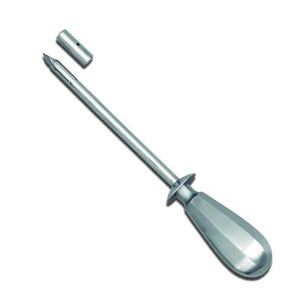
Ergonomically designed grip assembly with precision-machined sheath ensuring atraumatic insertion, optimal seal integrity, and minimal tissue trauma.
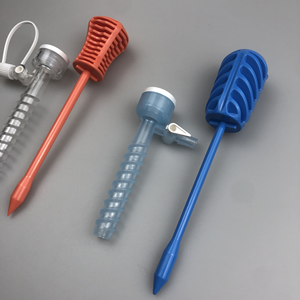
Medical-grade PVC and polyurethane thoracic trocar catheters with radio-opaque stripes, depth markers, and smooth lateral eyes for efficient pleural cavity drainage.
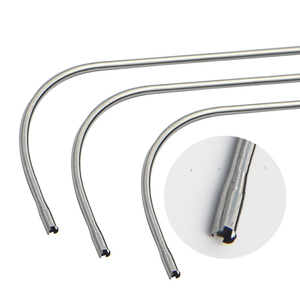
Pre-bent flexible micro-cannula tubing designed for intricate ENT sinus irrigation, endoscopic suctioning, and controlled surgical fluid evacuation.
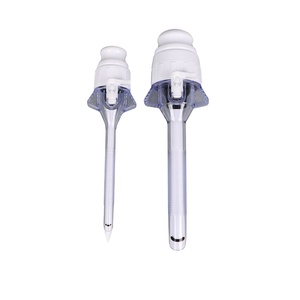
Minimalist 5mm bladeless optical trocar sleeve with duckbill sealing valves to preserve pneumoperitoneum during laparoscopic surgical interventions.
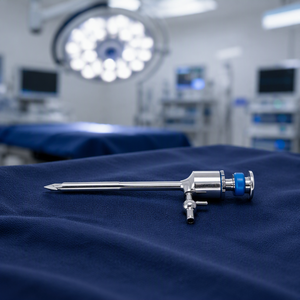
Safety-shielded surgical trocar cannula featuring spring-loaded blade protection to eliminate accidental visceral injury upon abdominal wall penetration.
Under the visionary umbrella of Saudi Arabia’s Vision 2030 National Transformation Program, the Kingdom’s healthcare infrastructure is undergoing a historic realignment. Riyadh, serving as the central powerhouse of the Gulf Cooperation Council (GCC) medical sector, has accelerated the privatization and modernization of its healthcare assets through the Health Holding Company (HHC) and localized regional Health Clusters (First, Second, and Third Health Clusters in the Riyadh Region). For hospital procurement executives, clinical supply chain directors, and medical device importers, sourcing single-use urological disposables—specifically closed-system urine collection bags, urometers, and catheter accessories—demands a sophisticated understanding of localized regulatory, environmental, and clinical criteria.
The procurement landscape in Riyadh is distinct. Suppliers cannot rely solely on standard international catalog specifications. The Saudi Food and Drug Authority (SFDA) enforces strict Medical Device Marketing Authorization (MDMA) rules alongside rigorous technical evaluations by NUPCO (National Unified Procurement Company). Furthermore, hospital-acquired infections, particularly Catheter-Associated Urinary Tract Infections (CAUTIs), represent a major benchmark metric for institutions accredited by the Saudi Central Board for Accreditation of Healthcare Institutions (CBAHI). As a result, premier OEM factories and certified overseas medical disposable manufacturers must deliver advanced anti-reflux mechanism design, needle-free sampling ports, zero-leak fluid dynamics, and thermally resilient polymer formulations built to survive ambient transit temperatures exceeding 45°C during summer logistics cycles in central Arabia.
Medical-grade urine collection bags are fundamentally bio-barrier systems designed to protect the urinary tract from bacterial colonization while accurately measuring fluid output. When evaluating urine bag factories for distribution or tender fulfillment in Riyadh, clinical buyers must audit three core structural zones: fluid intake/tubing architecture, collection chamber integrity, and drainage valve mechanisms.
Microbiological ascending infection remains the top cause of prolonged ICU stays. Modern urine bags specified in NUPCO tenders mandate flutter-valve or dog-leg mechanical anti-reflux barriers that prevent retro-flow of stagnant urine into the Foley catheter, even when the bag is inadvertently raised above patient bed level during ward transport.
To comply with CBAHI occupational safety and infection control protocols, urine collection bags must incorporate self-sealing, needle-free sampling ports. Nurses can draw urine specimens using standard luer-lock syringes without compromising system sterility or introducing needle-stick hazards.
Raw materials must feature high-grade, plasticizer-optimized Polyvinyl Chloride (PVC) or DEHP-free Elastomers. In Riyadh's arid climate, substandard PVC can become brittle or sticky during warehousing in non-climate-controlled freight hubs. Superior factories utilize UV-stabilized, medical-grade sheet polymers that retain elasticity and seam strength.
| Technical Specification | Standard Ward Bag (2000ml) | ICU Precision Urometer Bag | Pediatric / Neonatal Collection Bag |
|---|---|---|---|
| Target Application | General Post-Operative & Ward Use | Critical Care, Renal & Cardiac Surgery ICU | Pediatric & Neonatal Care Units |
| Capacity Options | 2000 ml / 3000 ml | 2000 ml bag with 450 ml / 500 ml chamber | 100 ml / 200 ml / 500 ml |
| Anti-Reflux Valve Type | One-way Flutter Valve or Molded Membrane | Dual-Chamber Mechanical Hydrophobic Valve | High-Sensitivity Non-Return Valve |
| Tubing Dimensions | 90 cm – 120 cm, Kink-Resistant Lumen | 120 cm – 150 cm with Sheet Clamp & Slide Clip | Flexible Small-Bore Non-Kinking Tubing |
| Graduation Accuracy | ±10% Increment Scale | ±2.5% Fine Volume Measuring Chamber | ±1 ml Micro-Graduated Markings |
| Drainage Outlet Tap | T-Tap, Push-Pull, or Flip-Flo Valve | Single-Hand Operated High-Flow Lever Tap | Secure Twist-Off Leakproof Outlet |
Sourcing medical disposables for Saudi Arabia requires understanding the distinct operational workflows across Riyadh’s tier-one medical facilities, including King Faisal Specialist Hospital & Research Centre (KFSHRC), King Fahad Medical City (KFMC), Prince Sultan Military Medical City (PSMMC), and leading private healthcare groups such as Dr. Sulaiman Al Habib Medical Group and Mouwasat Hospitals.
In high-acuity environments like KFSHRC’s organ transplant ICUs or burn centers, precise fluid balance calculation is vital for renal perfusion monitoring. Here, precision urometers with dual-chamber measuring columns (graduated in 1 ml increments up to 50 ml, and 5 ml increments up to 500 ml) are essential. Factories supplying these units must guarantee clear, hydrophobic PTFE air vents to ensure uninterrupted gravity flow without vacuum lock.
Emergency trauma centers located along major Riyadh arteries experience rapid patient turnover. Procurement demands high-volume 2000ml urine bags with extra-wide internal diameter tubing to prevent blockage by mucosal plugs or blood clots during acute post-traumatic urinary tract care. T-tap bottom outlets with one-hand operational latches enable swift hygienic emptying into waste receptacles without spillage.
With the expansion of the Ministry of Health's Home Healthcare Program (HHC) throughout the Riyadh province, demand for discrete leg bags (500ml and 750ml capacities) with soft fabric backing has surged. These products must feature skin-friendly, non-allergic elastic straps, anti-slosh baffle channels, and quiet-draining valves to maintain patient dignity and comfort in domestic settings.
The urinary management device market in Saudi Arabia is undergoing rapid changes driven by centralized tender aggregation and strict localization quotas. Importers and hospital procurement leads must consider several key industry shifts:
Leading Saudi distributors are increasingly partnering directly with established medical factories in India and Asia to create private-label medical lines. By securing OEM rights, distributors can register custom artwork with the SFDA while controlling end-to-end tender pricing against European multi-nationals.
The SFDA now enforces stringent Unique Device Identification (UDI) tracking on all sterile single-use medical devices. Packaging must feature GS1-compliant DataMatrix barcodes encoding GTIN, Lot Number, Manufacturing Date, and Expiration Date to pass customs clearance at King Khalid International Airport cargo terminals.
Furthermore, sustainability initiative mandates under Vision 2030 are encouraging hospitals to evaluate eco-friendly packaging and phthalate-free (DEHP-free) plastics. Suppliers who proactively eliminate hazardous plasticizers while offering recyclable secondary cartons gain a distinct edge in competitive tender evaluations.
Founded in 1955, Sterimed Group (Sterimed Medical Devices Pvt. Ltd. & Sterimed Surgicals India Pvt. Ltd.) stands as one of Asia's most authoritative manufacturers and global exporters of single-use urology disposables, airway management catheters, surgical tapes, and specialized medical-grade silicone tubing. Operating out of state-of-the-art manufacturing facilities certified to ISO 9001, ISO 13485, WHO-GMP, and European CE standards, Sterimed supplies healthcare networks across 90+ countries worldwide.
Automated high-frequency dielectric PVC welding and automated dipping lines housed within Class 100,000 (ISO Class 8) controlled cleanrooms ensure minimal bioburden levels prior to terminal sterilization.
Terminal EO sterilization cycles validated strictly under ISO 11135 principles. Every production lot undergoes rigorous bioburden, sterility testing, and EO residual analysis (<4mg/device) prior to dispatch.
Dedicated international regulatory affairs desk providing comprehensive technical files, biocompatibility dossiers (ISO 10993), stability test reports, and Free Sale Certificates required for SFDA registration.
Are you a medical device distributor, hospital procurement officer, or tender contractor operating in Saudi Arabia? Contact our export engineering team today for technical data sheets, sample evaluation kits, and direct factory quotation pricing.